How to Import Japanese Used Cars from Japan in 2026

Importing a used car from Japan can be one of the smartest ways to buy a reliable, fuel-efficient, and well-maintained vehicle. Japan is known for clean roads, strict vehicle inspections, and a wide variety of cars available through local dealers, used car auctions, and export companies.
But for many overseas buyers, the process can feel confusing at first. You may ask:
- How do I choose the right car?
- How do I check the auction sheet?
- What is FOB, C&F, or CIF price?
- Which documents do I need?
- How do I avoid scams?
- How long does shipping take?
This guide explains the complete process of importing Japanese used cars from Japan in 2026 in a simple and practical way. Whether you are buying one car for personal use or sourcing vehicles for resale, this article will help you understand the correct steps before sending money or confirming a purchase.
At Nippon Vehicles, we support international buyers with stock vehicles, auction sourcing, chassis number checking, C&F quotations, export documents, and shipping guidance from Japan.
Quick Import Checklist
- Check country import rules
- Choose the right vehicle
- Check auction sheet
- Confirm C&F price
- Pay safely
- Prepare export documents
Why Buyers Choose Japanese Used Cars
Japanese used cars are popular worldwide because they offer strong value for money. Many vehicles in Japan are well maintained, have lower mileage compared with similar cars in other markets, and come with detailed auction or inspection information when purchased properly.
Popular choices include:
- Toyota Prius
- Toyota Aqua
- Toyota Land Cruiser
- Toyota Prado
- Toyota Hiace
- Toyota Harrier
- Nissan Note e-Power
- Honda Fit
- Suzuki Swift
- Daihatsu Mira
- Suzuki Carry
- Daihatsu Hijet
- Toyota Coaster
- Japanese trucks and commercial vehicles
Buyers from Africa, Asia, the Caribbean, Oceania, the Middle East, and other regions often prefer Japanese vehicles because spare parts are available, fuel economy is good, and many models are known for long-term reliability.
Browse available Japanese used cars:
View Nippon Vehicles Stock
Step 1: Check Your Country’s Import Rules First
Before choosing a vehicle, always check the import rules in your country. This is one of the most important steps.
Every country has different rules for:
- Vehicle age limit
- Right-hand drive or left-hand drive allowance
- Emission standards
- Roadworthiness inspection
- Pre-shipment inspection
- Customs duty and taxes
- Required documents
- Port clearance process
For example, some countries allow only vehicles under a certain age. Others require pre-shipment inspection before the vehicle leaves Japan. Some countries also require specific documents or local agent support before customs clearance.
Do not buy a vehicle only because the price looks cheap. First confirm whether that vehicle is legally importable to your country.
Check country import guidance:
Country Regulations for Japanese Used Cars
Japanese used cars should be checked carefully before export, including age, condition, documents, and destination country rules.
Step 2: Choose the Right Vehicle
After confirming your country’s import rules, choose a vehicle that matches your budget, purpose, and local market.
Ask yourself:
- Is the vehicle for personal use or resale?
- Do I need low fuel consumption?
- Do I need a family car, van, SUV, truck, or kei truck?
- Are spare parts easily available in my country?
- Is the engine size suitable for tax and fuel cost?
- Is the vehicle popular in my local market?
For personal use, many buyers choose Toyota, Honda, Nissan, Suzuki, and Daihatsu models because they are easy to maintain. For business use, Toyota Hiace, Toyota Coaster, light trucks, and kei trucks are popular.
If you are buying for resale, choose models that already have demand in your market. A cheap car is not always a good deal if it is difficult to sell or expensive to repair later.
Step 3: Understand Vehicle Price Terms: FOB, C&F, and CIF
When importing cars from Japan, you will often see different price terms. These are important to understand before making payment.
FOB Price
FOB means “Free on Board.” This usually includes the vehicle price and local Japan-side export handling until the vehicle is loaded for shipping. Ocean freight is not included.
C&F Price
C&F means “Cost and Freight.” This normally includes the vehicle price plus ocean freight to your destination port. Many overseas buyers prefer C&F because it gives a clearer idea of the total cost until the port.
CIF Price
CIF means “Cost, Insurance, and Freight.” This includes vehicle cost, freight, and marine insurance. Some buyers or countries may request CIF pricing.
When asking for a quote, always mention your destination country and port. For example:
- “Please quote C&F Dar es Salaam.”
- “Please quote C&F Mombasa.”
- “Please quote C&F Durban.”
- “Please quote C&F Brisbane.”
- “Please quote C&F Jebel Ali.”
This helps the exporter calculate shipping more accurately.
Step 4: Check Auction Sheet and Chassis Number
A Japanese auction sheet can tell you a lot about the vehicle’s condition. It may include auction grade, interior grade, mileage, repair history, scratches, dents, accident marks, rust, corrosion, and other important notes.
Common auction grades include:
- Grade 5: Excellent condition
- Grade 4.5: Very good condition
- Grade 4: Good used condition
- Grade 3.5: Average condition
- Grade R or RA: Repaired or accident history
- Grade 0 or ***: Special case, accident, modified, or unclear condition depending on auction
However, auction sheets must be checked carefully. Some buyers only look at the grade and ignore the remarks. This is risky. A vehicle may look clean in photos but have hidden issues written in the auction sheet.
Before buying, check:
- Chassis number
- Auction sheet
- Mileage history
- Accident history
- Repair marks
- Rust or corrosion
- Engine and transmission notes
- Interior and exterior grade
- Any warning comments from the inspector
At Nippon Vehicles, buyers can use our chassis lookup and auction history support before making a decision.
Check Japanese vehicle details by chassis number:
Japanese Auction History & Chassis Lookup
Checking auction history and chassis number can help buyers avoid wrong purchases, fake mileage, and hidden accident history.
Step 5: Confirm Total Cost Before Payment
Before you send payment, make sure you understand the full cost.
A proper quotation should clearly explain:
- Vehicle price
- Auction fee or service fee, if applicable
- Inland transport in Japan
- Export handling charges
- Shipping cost
- Inspection cost, if required
- Document charges, if applicable
- Destination port
- Payment terms
- Estimated shipping schedule
Remember that import duty, local tax, port charges, clearing agent charges, registration, and local transport in your country are usually paid by the buyer at destination. These costs are not always included in the Japan-side invoice.
Always ask your local clearing agent about destination charges before confirming the vehicle.
Step 6: Make Payment Safely
Payment safety is very important when buying vehicles online.
Before sending money, check:
- Company name
- Company address
- Official website
- Official email address
- Bank account name
- Invoice details
- Vehicle details
- Chassis number
- Exporter contact information
Be careful if someone asks you to send money to a personal bank account, unrelated company name, or unknown third-party account. The bank account name should normally match the selling company or official payment instructions.
Also avoid deals that look too cheap. Very low prices are often used by scammers to push buyers into fast payment.
A serious exporter should be able to explain the vehicle condition, payment process, export documents, and shipping plan clearly.
Step 7: Arrange Shipping from Japan
Once payment is confirmed and the vehicle is ready for export, shipping can be arranged.
The two common shipping methods are:
Ro-Ro Shipping
Ro-Ro means “Roll-on/Roll-off.” The vehicle is driven onto the vessel and driven off at the destination port. It is commonly used for running vehicles and is often cost-effective.
Ro-Ro is suitable for:
- Cars
- SUVs
- Vans
- Trucks
- Buses
- Machinery that can move or be loaded properly
Container Shipping
Container shipping may be used for non-running vehicles, multiple units, valuable vehicles, parts, or vehicles that need extra protection. It can be more flexible but may cost more depending on destination and loading condition.
Container shipping is useful for:
- Accident vehicles
- Parts with vehicle
- Multiple cars
- High-value cars
- Non-runners
- Special cargo
Your exporter should guide you based on the vehicle type and destination port.
Step 8: Prepare Export Documents
Vehicle export requires proper documents. These documents are important for customs clearance and registration in the destination country.
Common documents may include:
- Commercial Invoice
- Export Certificate / Deregistration Certificate
- Bill of Lading
- Inspection Certificate, if required
- Marine Insurance Certificate, if CIF
- Other destination-specific documents
The exact documents depend on your country’s import rules. In Japan, used vehicles must go through proper export procedures before shipment. For some destinations, inspection may also be required before shipping.
Always confirm with your local clearing agent which documents are required before the vehicle arrives.
Export documents such as invoice, export certificate, bill of lading, and inspection certificate are important for customs clearance.
Step 9: Customs Clearance at Destination Port
After the vehicle arrives at your destination port, your local clearing agent or customs broker will usually help with clearance.
At this stage, you may need to pay:
- Import duty
- VAT or GST
- Port handling charges
- Clearing agent fee
- Registration-related charges
- Local transport charges
- Inspection or compliance costs, if required locally
The Japan-side exporter usually cannot control these destination charges, so it is better to confirm them in advance with a local professional.
Step 10: Final Delivery and Registration
After customs clearance, the vehicle can be collected from the port or transported to your city. Depending on your country, you may need local inspection, number plate registration, insurance, and roadworthiness approval before driving.
Before using the vehicle, check:
- Engine oil
- Coolant
- Brake fluid
- Tires
- Battery
- Lights
- Wipers
- Brakes
- Transmission fluid
- Service history, if available
Even if the vehicle is in good condition, basic maintenance after arrival is always recommended.
Common Mistakes Buyers Should Avoid
Here are common mistakes buyers make when importing cars from Japan:
1. Buying Without Checking Import Rules
A vehicle may be cheap but not importable to your country. Always check local rules first.
2. Ignoring Auction Sheet Details
Do not look only at the auction grade. Read the remarks carefully.
3. Not Checking Chassis Number
The chassis number helps confirm the vehicle identity and available history.
4. Comparing Only FOB Price
A low FOB price can become expensive after shipping, inspection, tax, and local charges.
5. Sending Money to Unknown Accounts
Only pay through official company payment instructions.
6. Not Confirming Destination Charges
Local taxes and port charges can be high. Always ask your clearing agent.
7. Choosing the Wrong Car for Local Market
Some vehicles are hard to maintain or resell in certain countries. Choose wisely.
How Nippon Vehicles Can Help
Nippon Vehicles is a Japan-based used car exporter supporting overseas buyers with practical guidance from vehicle selection to shipping.
We can help with:
- Japanese used car stock
- Auction vehicle sourcing
- C&F quotation
- Chassis number lookup
- Auction history support
- Vehicle condition guidance
- Export documents
- Shipping arrangement
- Buyer support by WhatsApp and email
If you are not sure which car is best for your country, send us your budget, destination port, and preferred vehicle type. We can guide you based on availability, shipping, and market demand.
Contact Nippon Vehicles
WhatsApp: +81-70-1145-9290
Email: nv@nipponvehicles.com
Website: NipponVehicles.com
Stock: Japanese Used Cars in Stock
Contact page: Contact Nippon Vehicles
Useful Reference Links
Japan Customs – Export procedures for used vehicles:
Japan Customs Used Vehicle Export Procedures
JEVIC – Vehicle inspection services:
JEVIC Vehicle Inspection Services
JAAI – Inspection procedures for exporting used motor vehicles:
JAAI Export Inspection Procedures
Nippon Vehicles – Japanese used car stock:
Browse Nippon Vehicles Stock
Nippon Vehicles – Chassis lookup and auction history support:
Japanese Chassis Lookup and Auction History Support
Frequently Asked Questions
1. Can I import a Japanese used car myself?
Yes, but it is much easier and safer to work with a Japan-based exporter who can help with vehicle checking, export documents, shipping, and communication with shipping companies.
2. What is the best car to import from Japan?
It depends on your country, budget, and purpose. Toyota Prius, Toyota Aqua, Toyota Hiace, Toyota Land Cruiser, Toyota Prado, Honda Fit, Nissan Note e-Power, Suzuki Carry, and Daihatsu Hijet are popular choices in many markets.
3. What is C&F price?
C&F price usually means the vehicle price plus ocean freight to your destination port. It does not usually include import duty, local tax, port charges, or registration costs in your country.
4. Why is chassis number checking important?
Chassis number checking helps confirm vehicle details and may help identify auction history, mileage records, model information, and possible past accident history when data is available.
5. What documents are needed to import a car from Japan?
Common documents include commercial invoice, export certificate, bill of lading, and inspection certificate if required. Requirements depend on the destination country.
6. Is Ro-Ro shipping better than container shipping?
Ro-Ro is often better for running vehicles because it is simple and cost-effective. Container shipping may be better for non-running vehicles, parts, multiple vehicles, or high-value cars.
7. How long does shipping from Japan take?
Shipping time depends on destination port, vessel schedule, transshipment, and shipping company availability. Your exporter can provide estimated ETD and ETA after booking.
8. How can I avoid scams when buying Japanese cars online?
Check the exporter’s company details, official website, invoice, bank account name, vehicle details, and communication history. Avoid sending money to personal or unrelated bank accounts.
Final Advice
Importing a Japanese used car is not difficult when you follow the correct steps. The most important things are checking your country’s import rules, choosing the right vehicle, verifying the auction sheet and chassis number, confirming the total cost, making safe payment, and preparing the correct documents.
If you need help importing Japanese used cars from Japan, Nippon Vehicles can guide you from vehicle selection to shipping.
Get a quotation today:
WhatsApp: +81-70-1145-9290
Email: nv@nipponvehicles.com
Website: NipponVehicles.com
Related Guides
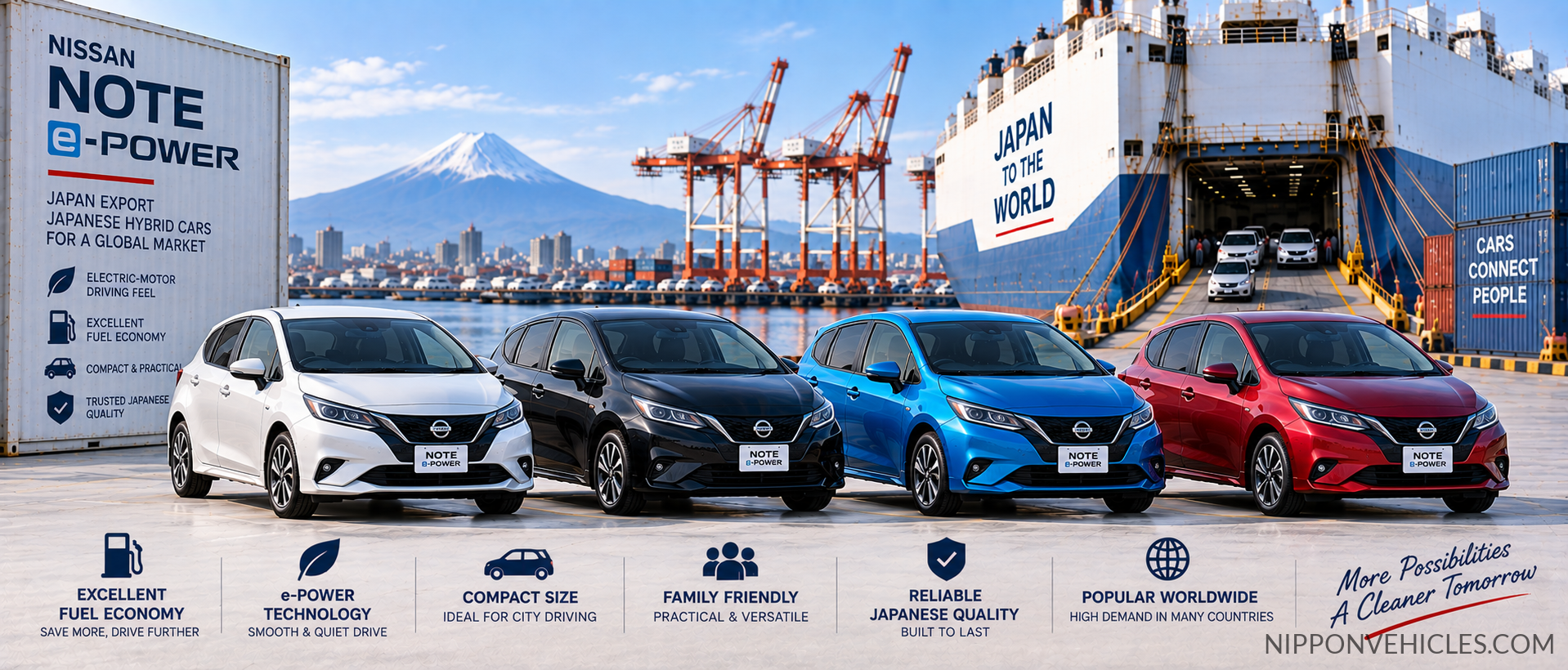
Nissan Note e-POWER from Japan Buying Guide
Quick Answer: Should You Import a Nissan Note e-POWER from Japan? Best for: Compact hybrid use, city driving, fuel economy and resale Main checks: e-POWER system,…
Read guide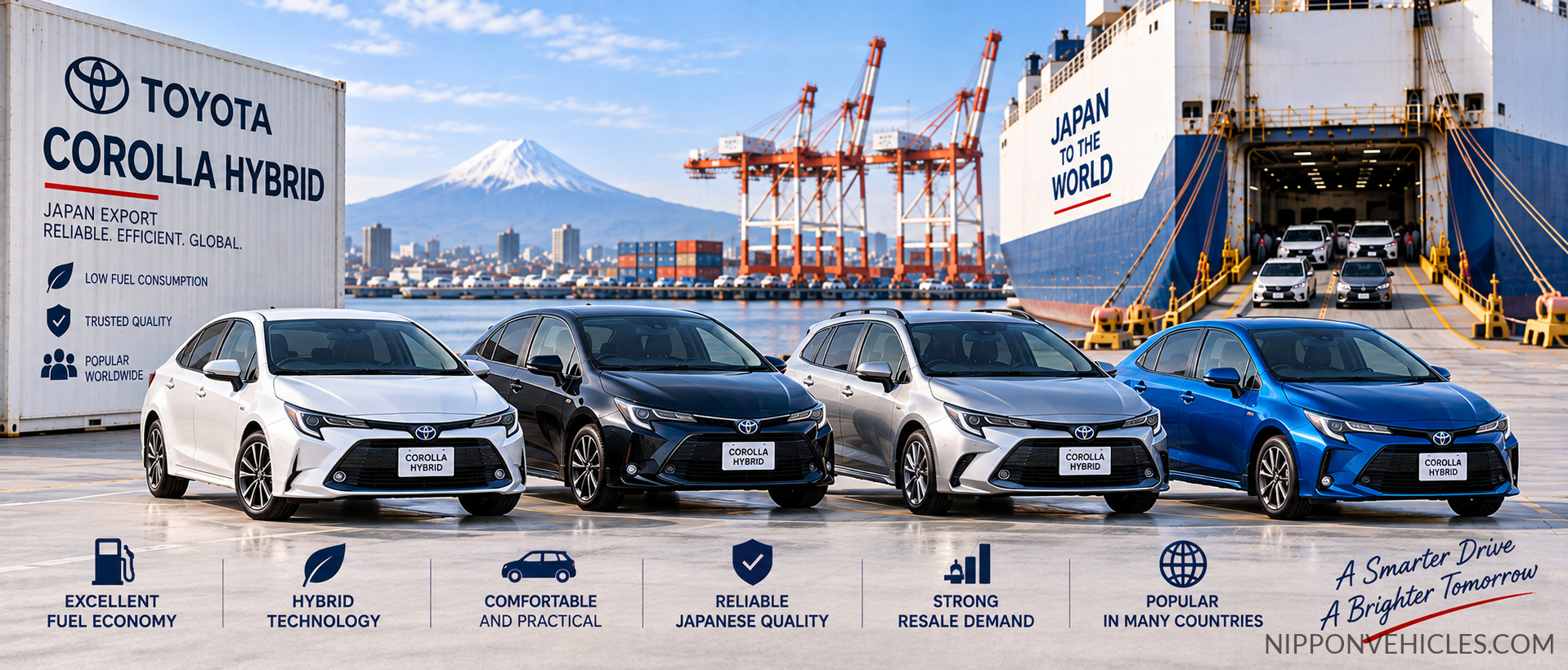
Toyota Corolla Hybrid from Japan Buying Guide
Quick Answer: Should You Import a Toyota Corolla Hybrid from Japan? Best for: Fuel economy, comfort, resale and daily driving Main checks: Hybrid battery, auction sheet,…
Read guide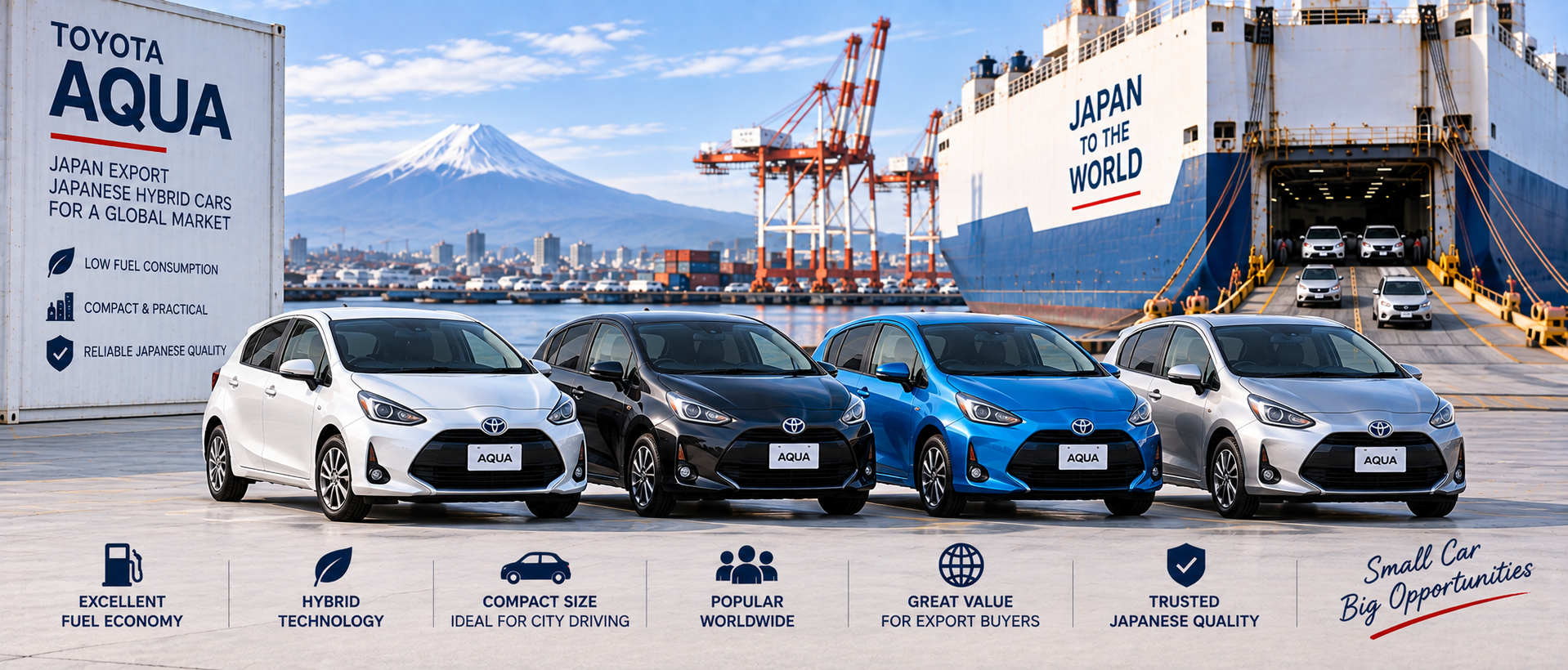
Toyota Aqua from Japan Buying Guide
Quick Answer: Should You Import a Toyota Aqua from Japan? Best for: Fuel economy, city driving, daily use and resale Main checks: Hybrid battery, mileage, auction…
Read guideReady to find your next vehicle from Japan?
Browse current stock and Japan auctions, or ask our export team for a C&F quotation to your destination port.