Shipping Japanese Used Cars Worldwide
Nippon Vehicles supports overseas buyers with Japanese used car shipping, C&F quotation guidance, export document preparation, and port-to-port shipment arrangements for cars, vans, trucks, buses, kei vehicles, hybrids, and commercial vehicles.
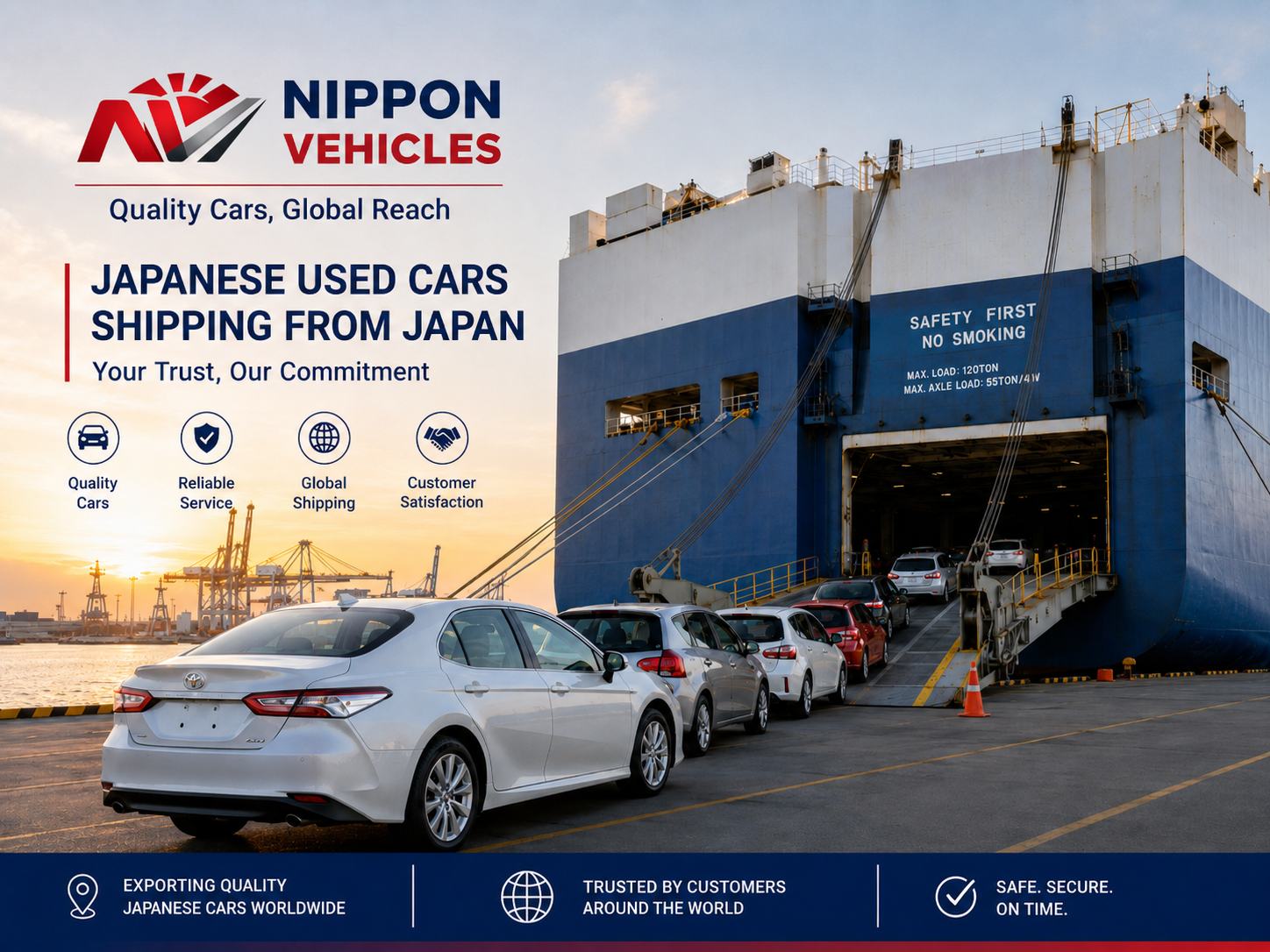
Complete Export Shipping Support from Japan
Buying a Japanese used vehicle is only one part of the process. The important part is arranging the correct export procedure, shipping route, vessel booking, and documents so the vehicle can reach your destination port safely. Nippon Vehicles helps buyers understand the shipping process clearly before payment.
We can support stock sales vehicles, auction-purchased vehicles, and commercial vehicles depending on availability, condition, route, port acceptance, and shipping company requirements.
RoRo Shipping
Roll-on/Roll-off shipping is the most common method for drivable vehicles. Cars are driven onto the vessel in Japan and driven off at the destination port. It is often suitable for standard cars, vans, SUVs, buses, and trucks.
Container Shipping
Container shipping may be used when RoRo is not available, when the vehicle is non-running, when parts are included, or when the route requires container handling. Final acceptance depends on vehicle size and cargo condition.
Export Documents
Japan-side export requires correct documents. We guide buyers with invoice, export certificate, shipping documents, and the usual paperwork required after payment and booking confirmation.
Shipping Method Comparison
| RoRo | Best for running vehicles. Usually simpler and cost-effective for cars, vans, trucks, and buses where RoRo service is available. |
|---|---|
| Container | Useful for non-running vehicles, parts, special cargo, or destinations without suitable RoRo service. Loading and handling costs may be higher. |
| Mixed Cargo / Parts | Used parts, engines, panels, and accessories may need separate packing, export handling, and shipping method confirmation. |
| Oversize Vehicles | Large trucks, buses, campers, and equipment require exact dimensions, weight, running condition, and port acceptance confirmation. |
Visual Shipping Flow
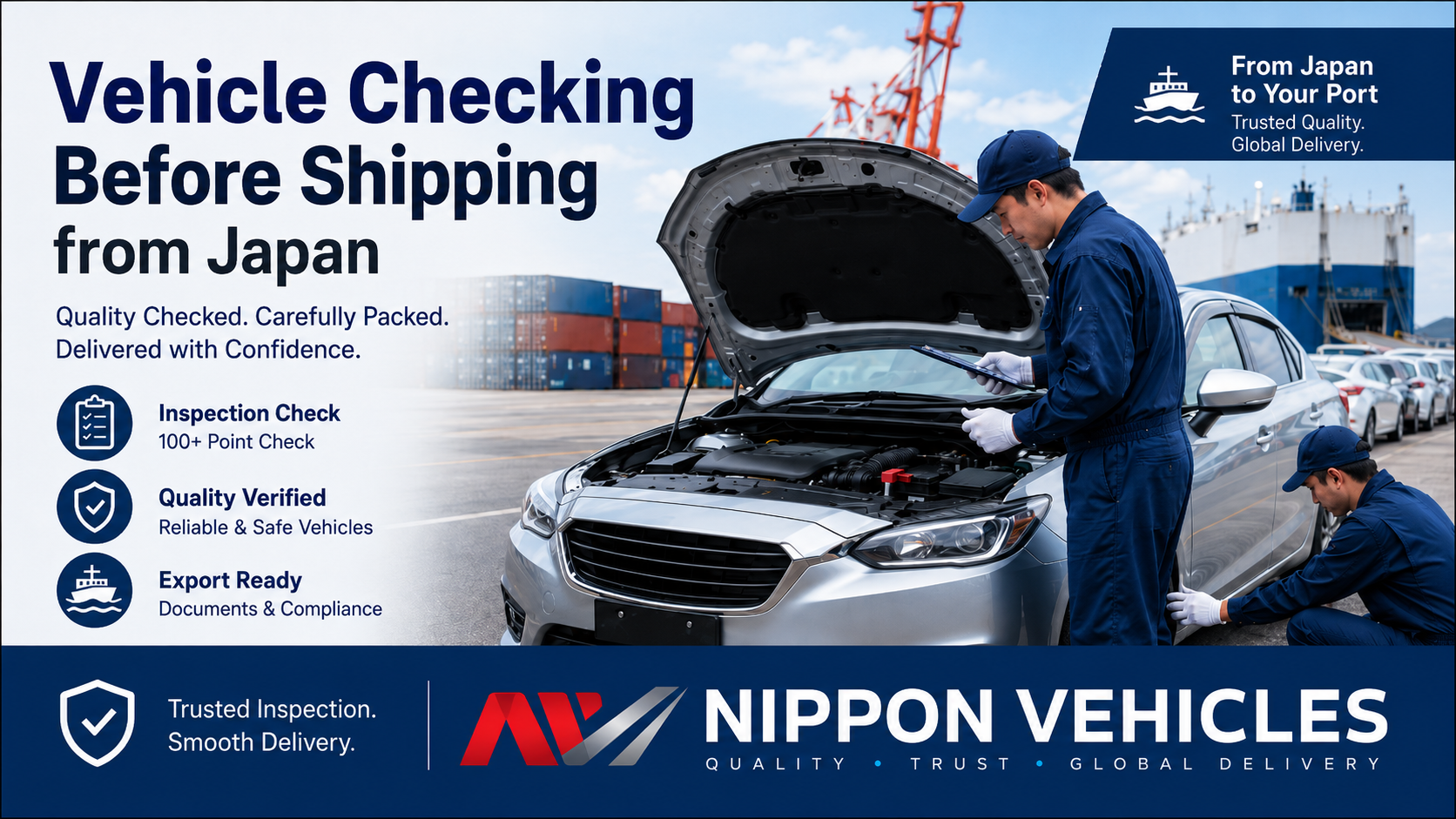 1. Vehicle Check
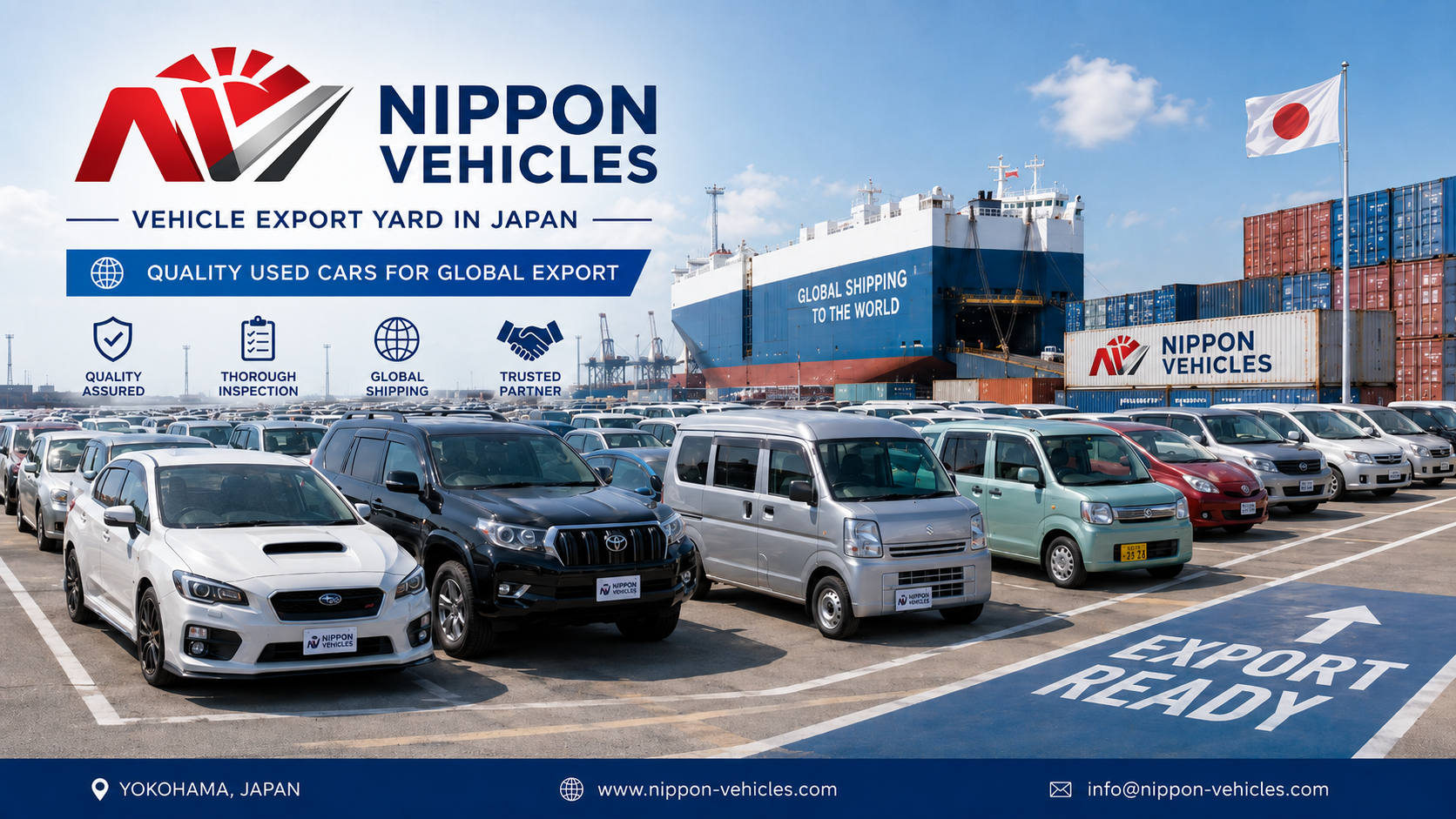 2. Export Yard / Port
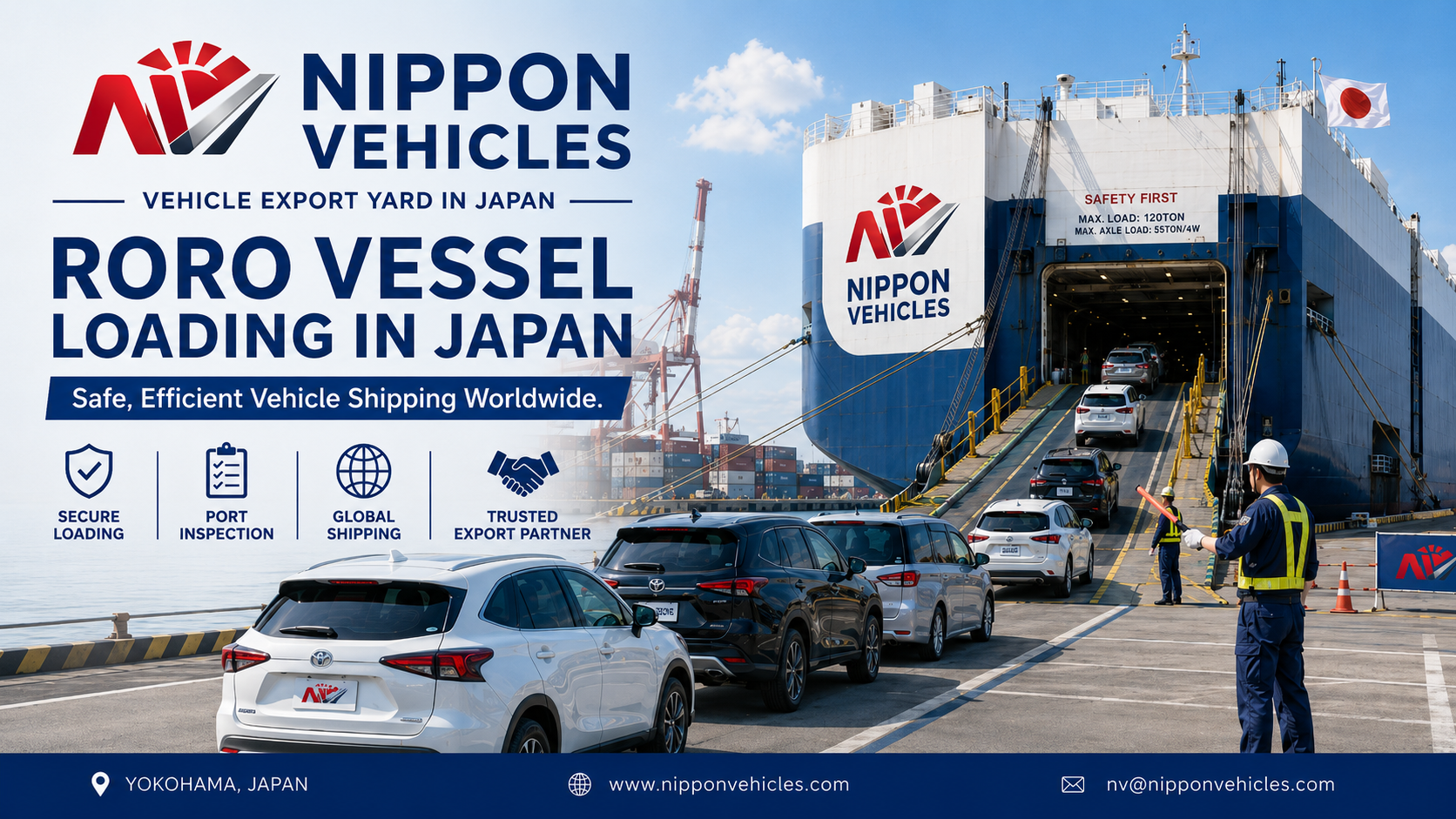 3. Vessel Loading
Step-by-Step Shipping Process
Information Needed for a C&F Quote
Buyer Responsibilities
Shipping Terms Explained
| FOB Japan | Vehicle price including Japan-side preparation for export/loading. Ocean freight is not included. |
|---|---|
| C&F / CFR | Vehicle price plus ocean freight to the destination port. Local destination costs are normally not included. |
| CIF | Cost, insurance, and freight. Insurance must be confirmed depending on route, vehicle, and shipping availability. |
| Freight | Ocean shipping cost from Japan port to destination port. Freight can change before final booking. |
| Local Charges | Import duty, port handling, clearing, registration, local inspection, storage, and taxes in destination country. |
| ETD / ETA | Estimated time of departure and arrival. These are estimates and may change due to vessel schedule or port conditions. |
Common Documents in Vehicle Export
Popular Destination Ports
Below are common destination examples used by overseas buyers. Final route, freight, schedule, vessel availability, and local rules must be confirmed at quotation time.
Country Notes for Buyers
Pakistan
Buyers should confirm import eligibility, age rules, duty structure, and consignee requirements before purchasing. Karachi is a common destination port.
UAE
Jebel Ali is commonly used for imports and re-export business. Confirm local customs, clearance, registration, and GCC requirements locally.
Kenya / Tanzania
Inspection and age restrictions may apply. Confirm local rules before bidding, especially for year, mileage, and inspection requirements.
Australia / Canada / UK
Import rules can be strict. Buyers should confirm compliance, eligibility, age rules, and local registration process before purchase.
How to Request an Accurate Shipping Quote
Send us clear information so we can reply faster. For standard cars, destination port is usually enough to start checking. For trucks, buses, campers, and special vehicles, dimensions and running condition are very important.
Frequently Asked Questions
Can you quote shipping to my country?
Yes. Send us the vehicle link and destination port. We will check available route and quotation details where possible.
Is freight included in the stock price?
Not always. Vehicle stock price may be FOB or asking price only. C&F quote must be confirmed separately for your destination port.
Can you ship trucks, buses, and vans?
Yes, many commercial vehicles can be shipped, but freight depends on size, route, port acceptance, running condition, and vessel availability.
Can you ship non-running vehicles?
Sometimes yes, but it depends on the route, port, shipping method, and loading requirements. Non-running vehicles usually need special handling and may cost more.
Who handles import duty and customs clearance?
The buyer or buyer's clearing agent usually handles local import duty, taxes, port fees, registration, and customs clearance at the destination country.
How long does shipping take?
Transit time depends on route, vessel schedule, transshipment, and destination port. We confirm estimated timing during quotation and booking.
Can I choose the shipping company?
Route availability and vessel schedules decide available options. We try to use practical and reliable shipping options when possible.
What happens after the vehicle reaches my port?
Your local clearing agent should handle port clearance, customs duty, local inspection, registration, and delivery according to your country rules.
Need a C&F quote from Japan?
Send the vehicle link, destination country, and port. Nippon Vehicles will guide you with stock price, freight support, export documents, and shipping process.車両リンク、国、港を送ってください。車両価格・船賃・輸出手続きについてご案内します。
Shipping information is for guidance only. Freight, inspection, booking, vessel schedule, document requirements, and local charges are subject to final confirmation.
Need help importing a Japanese used car?
Send us your destination country, port and vehicle link. We will guide you with stock sales, auction sourcing, C&F estimate, export documents and shipping support from Japan.