How to Avoid Japanese Used Car Export Scams
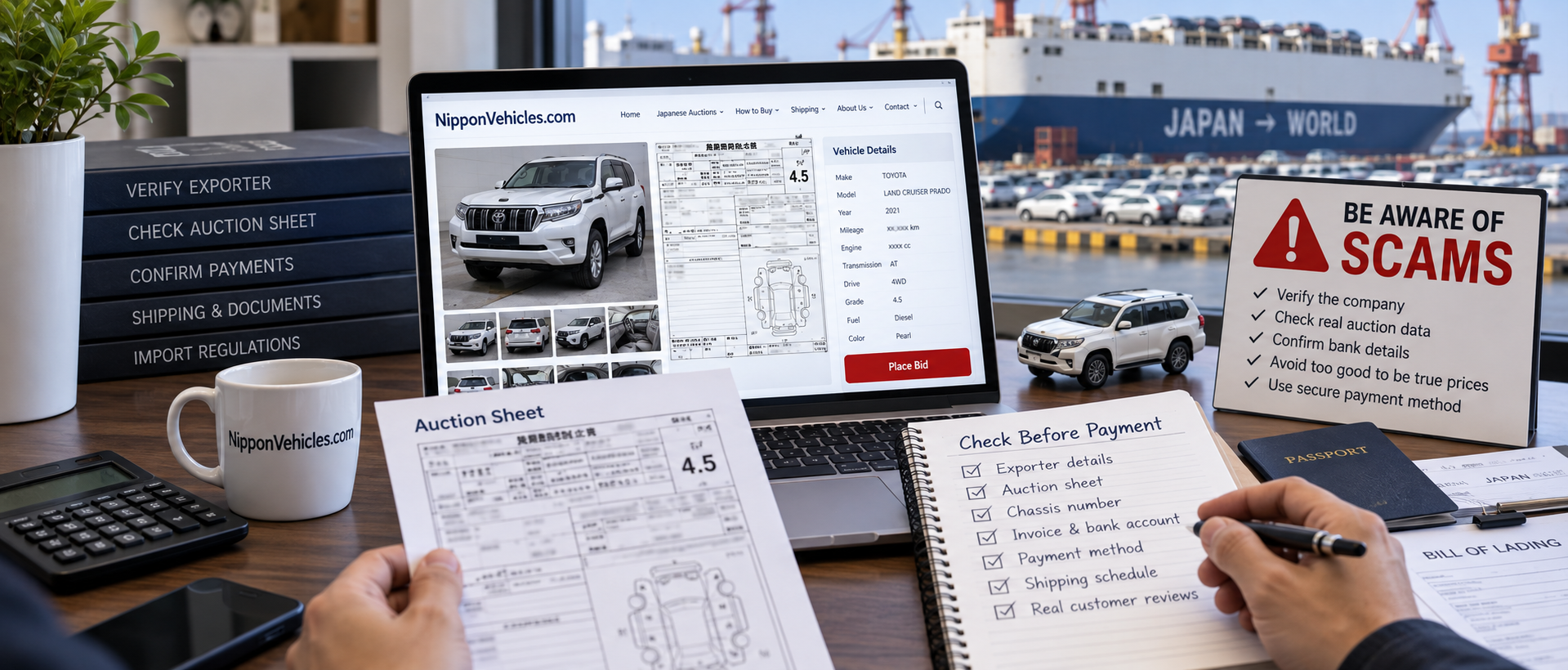
Learn how to check exporters, invoices, bank accounts, auction sheets, chassis numbers and payment risks before importing a used car from Japan.
Importing a used car from Japan can be safe and profitable when you work with a real exporter and check the vehicle properly. However, overseas buyers must be careful because car export scams can happen through fake websites, fake invoices, stolen photos, personal bank accounts, fake auction sheets and unrealistic low prices.
Many buyers lose money because they rush to send payment without checking the company, vehicle details, chassis number, documents and bank information. A cheap offer can become very expensive if the seller is not genuine.
This guide explains how to avoid Japanese used car export scams before sending payment or placing an auction bid.
Quick Safety Checklist
- Check company identity
- Verify website and contact details
- Check invoice and bank account
- Confirm chassis number
- Review auction sheet/history
- Avoid unrealistic prices
Common Japanese Used Car Export Scams
Car export scams can look professional at first. Scammers may copy real vehicle photos, use fake company names, create fake websites, send edited invoices or pretend to be connected with a real exporter.
Common scam types include:
- Fake exporter websites using stolen vehicle photos
- Fake Facebook pages or WhatsApp accounts
- Invoices with personal bank accounts
- Vehicle prices far below market value
- Fake auction sheets or edited inspection reports
- Seller refusing to provide chassis number
- Demanding urgent payment without clear documents
- Fake shipping documents after payment
- Changing bank account details after invoice is issued
- Using another company’s name, logo or photos
A genuine exporter should be able to explain the vehicle, quotation, payment details, export process and shipping clearly.
Warning Signs Before Sending Payment
Before buying a used car from Japan, watch for warning signs. One warning sign does not always prove a scam, but several warning signs together should make you stop and check carefully.
| Warning Sign | Why It Is Risky | What Buyer Should Do |
|---|---|---|
| Very cheap price | May be used to rush payment | Compare market and auction prices |
| Personal bank account | Harder to verify company ownership | Ask for company bank account |
| No chassis number | Vehicle identity cannot be checked | Do not pay until confirmed |
| Pressure to pay today | Scammers use urgency | Slow down and verify |
| Unclear invoice | May hide missing charges | Ask for full price breakdown |
| Fake or edited documents | Vehicle may not exist | Check details with exporter |
The safest action is simple: do not send payment until the company, invoice, vehicle details and bank account are clear.
Unsure About a Vehicle or Seller?
Send us the vehicle link, chassis number or auction sheet. Nippon Vehicles can help you understand what to check before buying from Japan.
How to Check a Japanese Car Exporter
Before buying, check whether the exporter looks genuine and consistent. Scammers often use copied photos and fake pages, but their company details, payment details and process may not match properly.
Check these points:
- Company name and official website
- Business address in Japan
- Company email address
- Consistent phone or WhatsApp number
- Clear vehicle stock or auction service
- Proper invoice format
- Company bank account name
- Clear payment and export process
- Vehicle information matching the invoice
- Professional communication and clear answers
A real exporter should not be afraid to answer normal buyer questions. They should explain the car, price term, payment, documents and shipping steps clearly.
Invoice and Bank Account Safety
Payment safety is one of the most important parts of importing a car from Japan. Before sending money, read the invoice carefully and confirm that the bank account belongs to the correct company.
A proper invoice should clearly show:
- Exporter company name
- Buyer name and consignee details
- Vehicle make, model and year
- Chassis number, where available
- Vehicle price and export charges
- FOB, C&F or CIF price term
- Destination port
- Payment amount and currency
- Bank name, branch and account holder
- Payment deadline and conditions
Be very careful if the invoice asks payment to a personal account, different company name, unknown third party or bank details that do not match the exporter.
For price terms, read our guide: FOB, C&F and CIF price in Japanese car export.
Vehicle Checks Before Buying from Japan
Even when the exporter is genuine, the vehicle must still be checked carefully. A real vehicle can still have accident history, mileage issues, rust, corrosion, mechanical problems or hidden repair marks.
Before buying, check:
- Chassis number
- Auction sheet
- Auction grade
- Mileage and mileage history
- Body diagram marks
- Inspector remarks
- Repair or accident history
- Rust and corrosion notes
- Interior condition
- Current photos and auction photos
Do not rely only on photos. Photos can make a car look clean, but the auction sheet may show repairs, scratches, dents, rust, warning lights or other important notes.
Useful guides:
- How to read a Japanese auction sheet before buying
- How to check Japanese auction history by chassis number
Check the Car Before Payment
Already have a chassis number or auction sheet? Check available auction history and condition details before buying.
Safe Buying Process for Japanese Used Cars
A safe buying process helps reduce risk before payment. Buyers should follow a clear step-by-step process instead of rushing because a seller says the vehicle will be sold today.
Step 1: Confirm the Vehicle Requirement
Decide the make, model, year, mileage, grade, fuel type, transmission, budget, country and destination port.
Step 2: Check Import Rules
Confirm your country’s age limit, inspection requirement, damaged vehicle rules, emission rules, duty, tax and registration process before buying.
Step 3: Verify the Exporter
Check company name, official website, contact details, invoice format, bank account and communication quality.
Step 4: Check the Vehicle
Review photos, auction sheet, chassis number, mileage, auction history and inspector remarks before making a decision.
Step 5: Confirm the Full Quotation
Understand whether the price is FOB, C&F or CIF. Confirm what is included and what destination costs are separate.
Step 6: Pay Only After Verification
Send payment only after invoice, company details, bank account and vehicle information are clear.
Step 7: Follow Shipping and Documents
After purchase, keep communication open about export documents, shipping schedule, vessel details and arrival process.
For the full import process, read: How to import Japanese used cars from Japan.
Safe Payment Tips for Buyers
Payment is the most sensitive step in car import. Once money is sent overseas, recovery can be difficult if the seller is fake or details are wrong.
Before payment, follow these tips:
- Pay only after receiving a clear invoice
- Check account holder name carefully
- Avoid personal accounts for company purchases
- Do not trust changed bank details without confirmation
- Confirm vehicle details before payment
- Keep all email and WhatsApp records
- Keep payment receipt and invoice copy
- Ask questions before sending money, not after
A genuine exporter should not pressure you to ignore normal checks.
How Nippon Vehicles Helps Buyers Stay Safe
Nippon Vehicles is a Japan-based used car exporter helping overseas buyers search, check and import vehicles from Japan. We focus on clear vehicle details, proper communication and transparent quotation support.
We can help buyers with:
- Japanese used car sourcing
- Auction vehicle search
- Auction sheet checking
- Chassis number and auction history support
- FOB and C&F quotations
- Export document guidance
- Ro-Ro and container shipping guidance
- Buyer support before payment
Send us your vehicle requirement, country and destination port. We will guide you step by step before purchase.
Buy from Japan with Clear Guidance
Browse verified stock or Japanese auction vehicles and ask Nippon Vehicles to check details before buying.
Frequently Asked Questions
How can I avoid Japanese used car export scams?
Check the exporter’s company details, official website, invoice, bank account, vehicle details, chassis number, auction sheet and quotation before sending payment.
Is a very cheap Japanese car offer risky?
A very cheap offer can be risky if it is far below market value. Buyers should compare prices and verify the vehicle, seller and invoice before payment.
Should I pay to a personal bank account?
For company vehicle purchases, buyers should be careful with personal bank accounts. The bank account name should match the exporter or be clearly verified before payment.
Why is chassis number important?
The chassis number helps identify the vehicle and may allow buyers to check available Japanese auction history, mileage records, old photos and possible red flags.
Can auction sheets be fake?
Auction sheets can be edited or misused by dishonest sellers. Buyers should compare auction sheet details with chassis number, photos, history and exporter information.
What should I check before sending payment?
Before payment, check company identity, invoice details, bank account name, vehicle chassis number, price term, destination port, auction sheet and shipping information.
Can Nippon Vehicles help check a vehicle before buying?
Yes. Nippon Vehicles can help check auction sheets, chassis number details, available auction history, FOB or C&F quotation and shipping guidance from Japan.
Final Advice
The best way to avoid Japanese used car export scams is to slow down and verify everything before payment. Check the exporter, invoice, bank account, chassis number, auction sheet, auction history, shipping cost and destination rules.
A genuine exporter will help you understand the vehicle and the buying process clearly. Do not send money only because the price looks cheap or the seller says the car will be sold quickly.
Need safe help buying from Japan?
WhatsApp: +81-70-1145-9290
Email: nv@nipponvehicles.com
Website: NipponVehicles.com
Related Guides
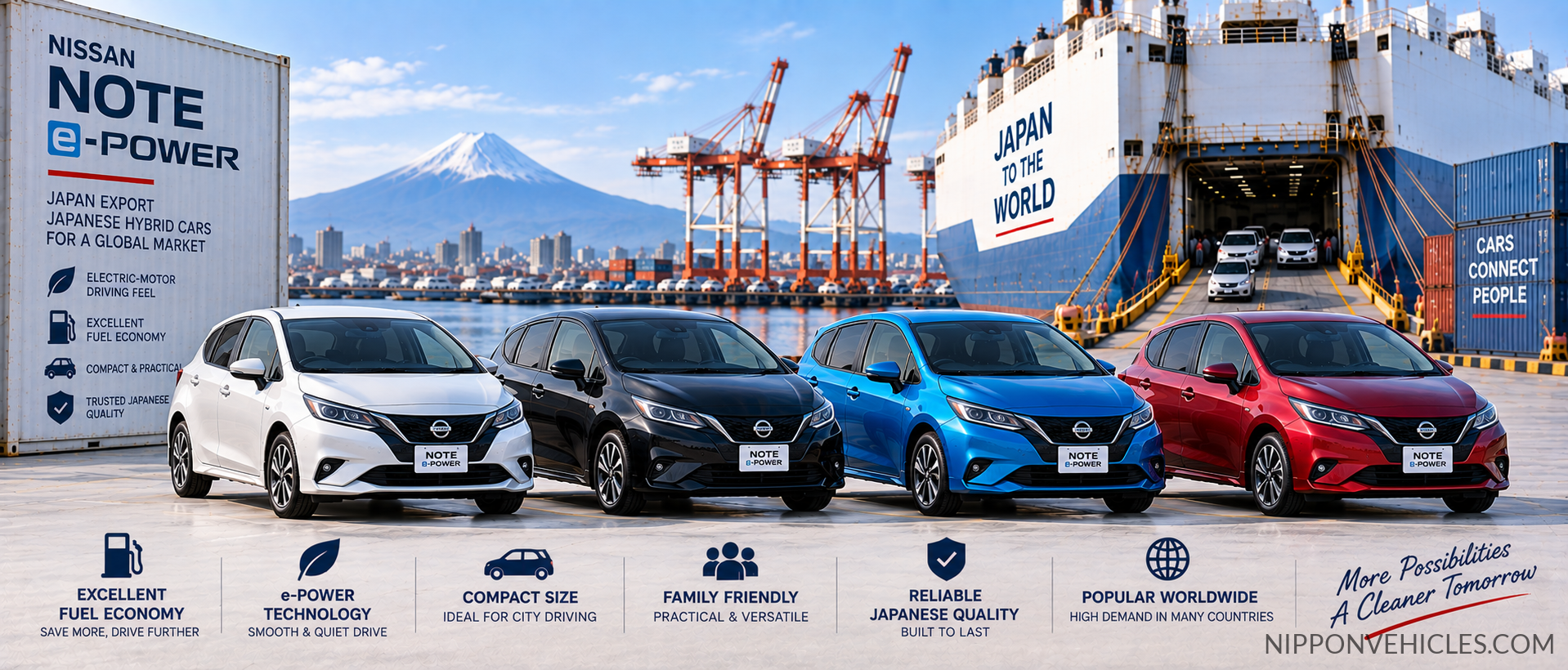
Nissan Note e-POWER from Japan Buying Guide
Quick Answer: Should You Import a Nissan Note e-POWER from Japan? Best for: Compact hybrid use, city driving, fuel economy and resale Main checks: e-POWER system,…
Read guide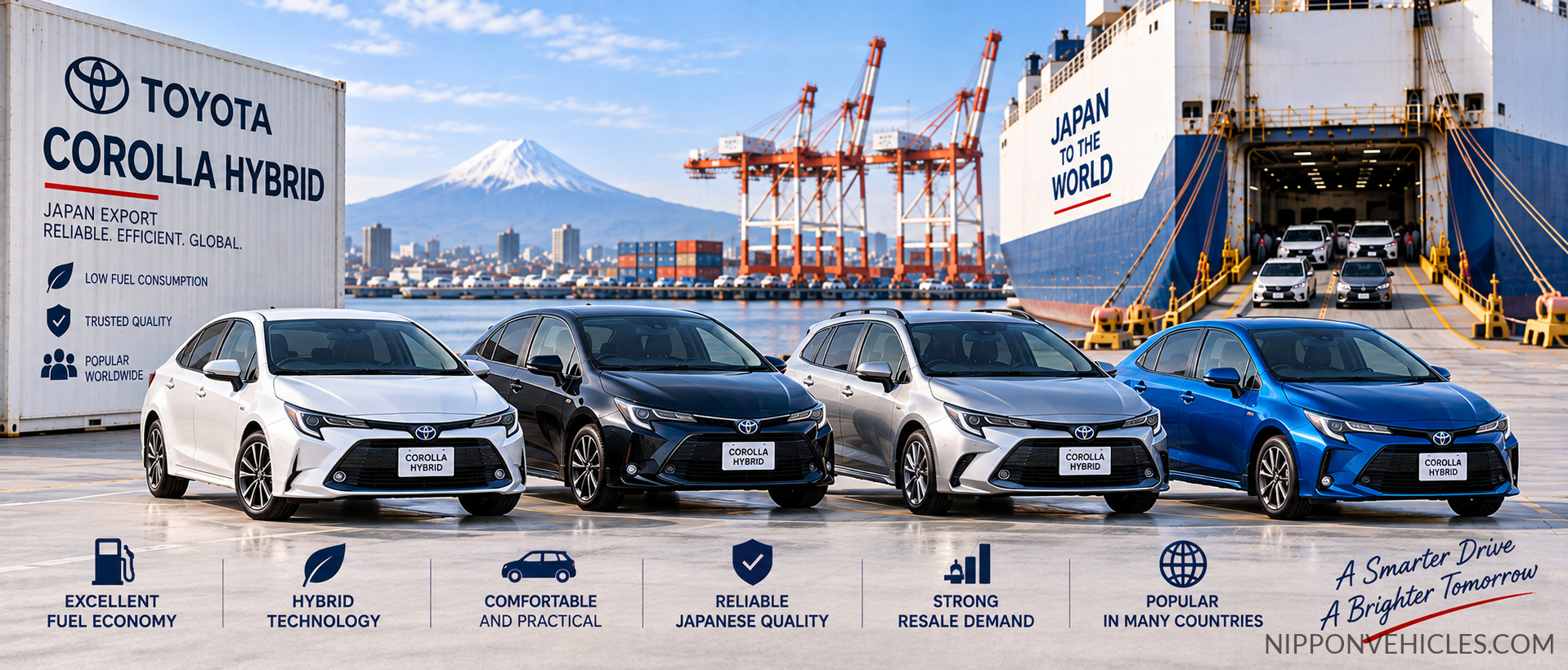
Toyota Corolla Hybrid from Japan Buying Guide
Quick Answer: Should You Import a Toyota Corolla Hybrid from Japan? Best for: Fuel economy, comfort, resale and daily driving Main checks: Hybrid battery, auction sheet,…
Read guide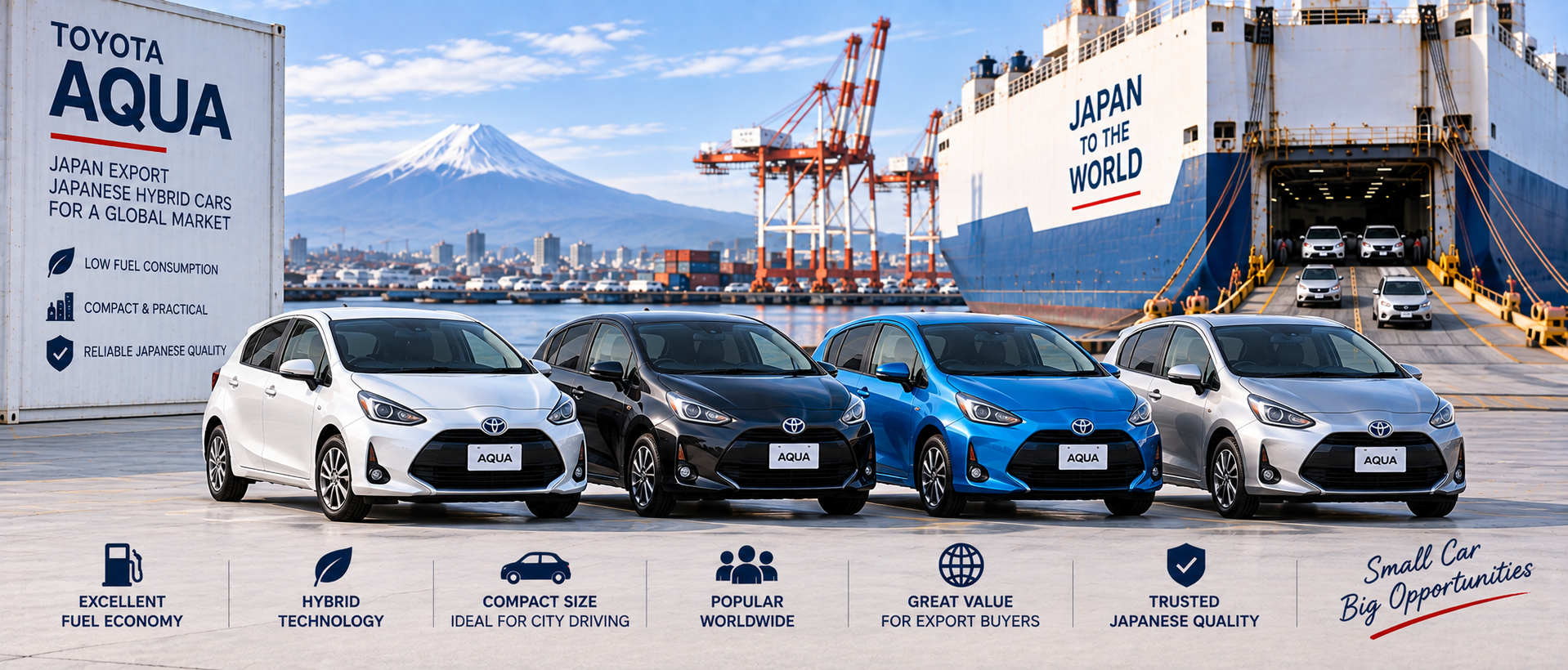
Toyota Aqua from Japan Buying Guide
Quick Answer: Should You Import a Toyota Aqua from Japan? Best for: Fuel economy, city driving, daily use and resale Main checks: Hybrid battery, mileage, auction…
Read guideReady to find your next vehicle from Japan?
Browse current stock and Japan auctions, or ask our export team for a C&F quotation to your destination port.