
How to Read a Japanese Auction Sheet Before Buying

Understand auction grades, mileage, body marks, repair history, interior condition and inspector remarks before buying a used car from Japan.
A Japanese auction sheet is one of the most important documents to check before buying a used car from Japan. It can show the vehicle’s auction grade, mileage, body condition, interior grade, repair marks, accident history, equipment and inspector remarks.
Many buyers only look at photos, year, mileage and price. That is risky. A car can look clean in photos, but the auction sheet may show scratches, dents, repaint marks, rust, corrosion, repaired panels, engine noise, warning lights or other important notes.
This guide explains how to read a Japanese auction sheet before buying, so you can understand the real condition and avoid expensive mistakes.
Already have a chassis number? You can also check available Japanese auction history by chassis number before buying.
Quick Auction Sheet Checklist
- Confirm chassis number
- Check auction grade
- Check mileage
- Read inspector remarks
- Study body diagram
- Compare with photos
What Is a Japanese Auction Sheet?
A Japanese auction sheet is an inspection report prepared for vehicles listed at Japanese used car auctions. It gives buyers a quick but important overview of the car’s condition before bidding.
The format may differ slightly depending on the auction house, but most auction sheets include:
- Lot number
- Chassis number
- Year and model information
- Mileage
- Auction grade
- Interior grade
- Transmission and equipment
- Body diagram with marks
- Inspector remarks
- Repair or accident history notes
The auction sheet is not only a form. It is a warning system. It helps buyers understand what cannot be seen clearly in photos.
Japanese Auction Grades Explained
The auction grade gives a general idea of the vehicle’s overall condition. However, grading standards may differ depending on the auction house, so the grade should be used as a guide, not a final guarantee.
| Grade | General Meaning | Buyer Note |
|---|---|---|
| S / 6 | Very new or excellent condition | Usually expensive, still check details |
| 5 | Excellent condition | Good for buyers wanting clean cars |
| 4.5 | Very good used condition | Popular choice for export buyers |
| 4 | Good used condition | Still check scratches, dents and remarks |
| 3.5 | Average used condition | Can be good value if remarks are minor |
| 3 | Rougher condition | Needs careful checking |
| R / RA | Repair or accident history | Check repair area and market rules carefully |
A higher grade usually means better condition, but it does not mean the car is perfect. A Grade 4 vehicle can still have scratches, dents, paint marks or interior wear. A Grade 3.5 vehicle may still be acceptable if the price is good and the remarks are not serious.
Related guide: Check Japanese auction history by chassis number.
Interior Grade: What Does It Mean?
The interior grade shows the condition of the cabin. This may include seats, dashboard, carpets, roof lining, smell, stains, cigarette burns, pet hair or general wear.
- A: Very clean interior
- B: Good condition with normal signs of use
- C: Noticeable wear, stains or dirt
- D: Poorer interior condition
- E: Very rough interior condition
Interior grade is important for dealers because cleaning, repairs and customer complaints can reduce profit after import.
How to Read Body Diagram Marks
The body diagram is one of the most useful parts of the Japanese auction sheet. It shows the car body and marks scratches, dents, paint waves, rust, corrosion and replaced panels.
| Mark | Common Meaning | What Buyer Should Check |
|---|---|---|
| A | Scratch | Size and location |
| U | Dent | Panel and severity |
| W | Wave, repair or paint unevenness | Possible repaint or panel work |
| S | Rust | Check underbody and chassis |
| C | Corrosion | Serious if on frame or underbody |
| X | Needs replacement | Repair cost may be high |
| XX | Replaced panel | Check whether structural repair exists |
Numbers after marks usually show severity. For example, A1 may be a small scratch, while A3 may be larger or more noticeable. Exact meaning can differ by auction house, so remarks and photos should always be checked together.
How to Read Inspector Remarks
Inspector remarks are often more important than the grade. These notes can mention mechanical issues, warning lights, rust, interior smell, repaint, accident repairs, missing parts or other details.
- Engine noise or oil leak
- Transmission slip or vibration
- Warning lights
- Air conditioner problem
- Rust or corrosion underneath
- Interior smell, cigarette odor or stains
- Repaint or repair marks
- Missing equipment or broken parts
- Mileage warning or meter replacement
Some remarks may be written in Japanese, so overseas buyers should not guess. A wrong translation can change the meaning completely. If you are unsure, ask a Japan-side expert to check the auction sheet before bidding or payment.
Need Help Reading an Auction Sheet?
Send us the auction sheet, chassis number or vehicle link. Nippon Vehicles can help explain auction grade, body marks, mileage, repair notes and possible red flags before you buy.
Mileage on Japanese Auction Sheets
Mileage is one of the most important points on an auction sheet. Buyers should compare the mileage on the auction sheet with seller information, export documents and available auction history.
- The current mileage is lower than older records
- The auction sheet mentions meter replacement
- The seller refuses to provide chassis number
- Mileage looks too low for the age of the vehicle
- Documents and auction sheet show different numbers
Before buying, it is smart to check the vehicle’s Japanese auction history by chassis number where available.
Japanese Auction Sheet Red Flags
Not every mark is dangerous, but some auction sheet details should be checked carefully before buying.
- Grade R or RA repair history
- Structural repair comments
- Serious rust or corrosion
- Engine, transmission or warning light notes
- Meter replacement or mileage warning
- Flood or water damage remarks
- Many replaced body panels
- Seller photos do not match auction sheet condition
- Chassis number is missing or unclear
For some buyers, a repaired vehicle may still be acceptable if the price is right and the repair is minor. But for many export markets, accident history, rust and mileage problems can reduce value or create import issues.
How to Read an Auction Sheet Step by Step
Step 1: Confirm the Chassis Number
Make sure the chassis number on the auction sheet matches the seller’s vehicle details and documents.
Step 2: Check the Auction Grade
Use the grade as a quick starting point, but do not make a decision based only on the grade.
Step 3: Check Mileage
Compare mileage with auction history, documents and the seller’s claim. Mileage inconsistency is a serious warning sign.
Step 4: Read the Body Diagram
Check the location and severity of scratches, dents, rust, corrosion, paint marks and replaced panels.
Step 5: Translate Inspector Remarks
Do not ignore Japanese notes. Important mechanical or repair information is often written in the remarks section.
Step 6: Compare with Photos
Look at auction photos and current seller photos together. If they do not match, ask for clarification before buying.
Step 7: Ask Before Sending Payment
If anything is unclear, ask Nippon Vehicles to check the auction sheet or chassis history before you make payment.
Best Auction Grades for Export Buyers
The best auction grade depends on your budget, country rules and purpose.
- For clean personal use: Grade 4, 4.5 or higher is usually safer.
- For dealers: Grade 3.5 or 4 can be good value if remarks are minor.
- For strict buyers: Avoid R, RA, serious rust, mileage warning and structural remarks.
- For budget buyers: Lower grades may be possible, but inspection is very important.
A cheap vehicle is not always a good deal. A car with accident history, bad corrosion, mechanical problems or wrong mileage can cost more after import.
How Nippon Vehicles Can Help
Nippon Vehicles helps overseas buyers source, check and import Japanese used cars from Japan. Before you bid or buy, we can help review auction sheet information and available auction history.
- Auction grade and interior grade
- Inspector remarks
- Body diagram marks
- Mileage and chassis number
- Repair or accident notes
- Rust and corrosion comments
- Possible red flags before payment
Send us the auction sheet, chassis number or vehicle link before buying. We will help you understand the condition clearly.
Check Before You Buy from Japan
Do not rely on photos only. Nippon Vehicles can help check auction sheet details, auction history, mileage records and repair remarks before payment.
Frequently Asked Questions
What is a Japanese auction sheet?
A Japanese auction sheet is an inspection report used at Japanese car auctions. It shows details such as auction grade, mileage, interior grade, body marks, equipment and inspector remarks.
Is auction grade enough to judge a car?
No. Auction grade is only a quick guide. Buyers should also check the body diagram, mileage, interior grade, repair marks, photos and inspector remarks.
What does Grade R or RA mean?
Grade R or RA usually means the vehicle has repair or accident history. Buyers should check the repair area, photos and remarks carefully before buying.
What do A, U, W, S and C mean on auction sheets?
Commonly, A means scratch, U means dent, W can mean wave or paint repair, S means rust and C means corrosion. Codes can differ slightly by auction house.
Can auction sheets show mileage problems?
Yes. Auction sheets and auction history can help identify mileage warnings, meter replacement notes or inconsistencies compared with current seller information.
Should I buy a Grade 3.5 car?
A Grade 3.5 car can be acceptable if the price is right and the remarks are minor. It should be checked carefully, especially for rust, repairs and mechanical notes.
Can Nippon Vehicles help translate auction sheets?
Yes. Send us the auction sheet, chassis number or vehicle link. Nippon Vehicles can help explain the main points and possible red flags before buying.
Final Advice
Learning how to read a Japanese auction sheet is one of the best ways to protect yourself before buying a used car from Japan. The sheet can reveal important details that photos and seller descriptions may not show.
Before sending payment, check the chassis number, auction grade, mileage, body diagram, interior grade, inspector remarks and available auction history. If anything is unclear, ask for help before buying.
Need help reading a Japanese auction sheet?
WhatsApp: +81-70-1145-9290
Email: nv@nipponvehicles.com
Chassis Lookup: Start Japanese auction history check
Related Guides
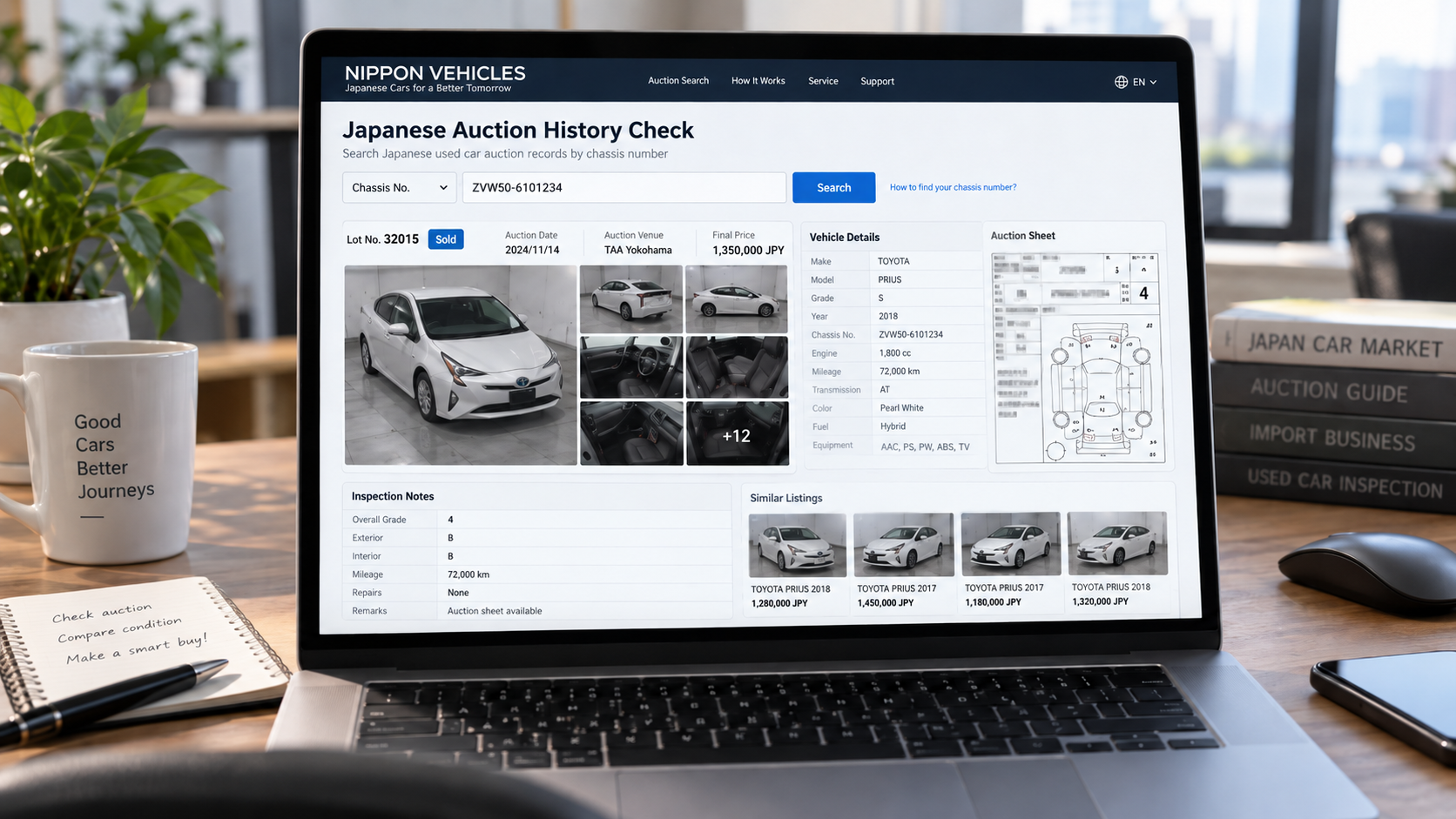
How to Check Japanese Auction History by Chassis Number
Auction & Chassis Check Guide Check Japanese Auction History Before You Buy Learn how a chassis number can help buyers verify Japanese auction records, mileage history,…
Read guide
Nissan Note e-POWER from Japan Buying Guide
Quick Answer: Should You Import a Nissan Note e-POWER from Japan? Best for: Compact hybrid use, city driving, fuel economy and resale Main checks: e-POWER system,…
Read guide
Toyota Corolla Hybrid from Japan Buying Guide
Quick Answer: Should You Import a Toyota Corolla Hybrid from Japan? Best for: Fuel economy, comfort, resale and daily driving Main checks: Hybrid battery, auction sheet,…
Read guideReady to find your next vehicle from Japan?
Browse current stock and Japan auctions, or ask our export team for a C&F quotation to your destination port.