How to Check Japanese Auction History by Chassis Number
Check Japanese Auction History Before You Buy
Learn how a chassis number can help buyers verify Japanese auction records, mileage history, accident remarks, auction sheet details and possible risks before importing a used car from Japan.
Buying a Japanese used car online can be a great decision, but it should never be based on photos only. A car may look clean in pictures, but its past auction records may show important details such as mileage history, accident repairs, auction grade, rust, corrosion, interior condition or inspector remarks.
This is why many serious buyers now search for Japanese auction history by chassis number before sending payment. The chassis number is the vehicle’s identity, and in many cases it can help confirm whether the car has appeared in Japanese auctions before.
At Nippon Vehicles, we help overseas buyers check Japanese auction history, auction sheet details and vehicle condition information before they buy or import a car from Japan.
Quick Auction History Checklist
- Confirm full chassis number
- Search available auction records
- Check mileage history
- Review auction grade
- Read inspector remarks
- Compare with seller photos
What Is a Chassis Number?
A chassis number is a unique identification number used to identify a vehicle. In Japan, many vehicles use a chassis code and number instead of the 17-digit VIN format used in some other countries. For example, Japanese vehicles may have chassis numbers like:
- ZVW30-1234567
- TRH200-0123456
- ANH20-7654321
- KDH201-9876543
- NZE141-1122334
The first part usually shows the model or chassis code, and the second part identifies the individual vehicle. This number is very important when checking auction history, export documents, model details and vehicle identity.
Where can you find the chassis number?
You may find the chassis number on:
- Japanese auction sheet
- Export certificate
- Vehicle inspection documents
- Chassis plate or body stamping
- Seller’s vehicle details page
- Invoice or quotation
Before paying for any vehicle, ask the seller to confirm the correct chassis number. If the chassis number is missing, unclear or different across documents, do not rush the purchase.
What Is Japanese Auction History?
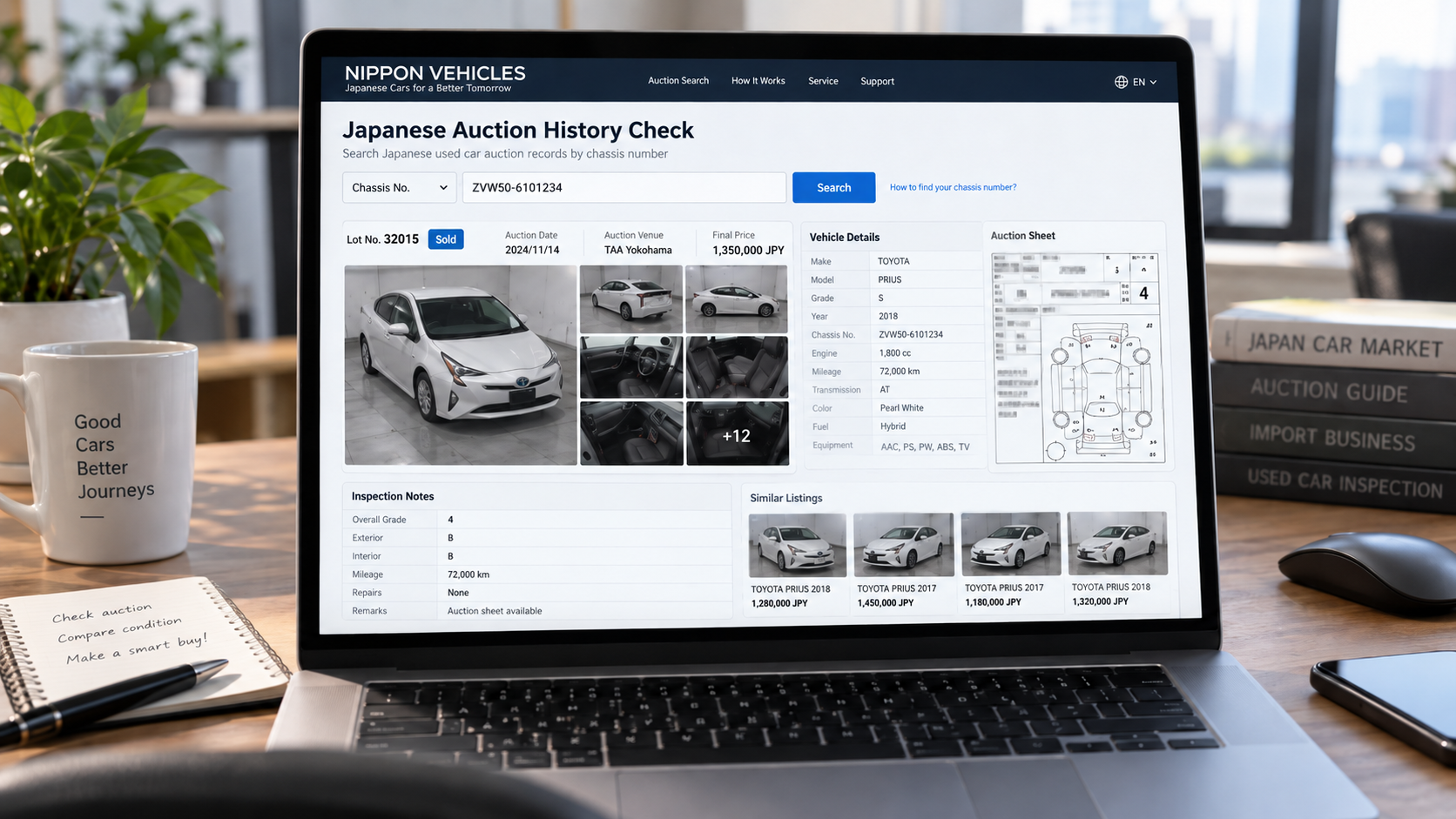
Japanese auction history means past information recorded when a vehicle was listed or sold through Japanese used car auctions. This can include auction sheet details, auction date, mileage, grade, repair marks, photos and remarks from auction inspectors.
Auction history is useful because it can show information that may not appear in normal seller photos. For example, a vehicle may look polished in new photos, but its previous auction sheet may mention accident repairs, corrosion, engine noise, interior smell, repaint marks or mileage differences.
This is why auction history checking is important for buyers, dealers and importers who want to reduce risk before buying Japanese used cars online.
Need to Check a Japanese Car Before Payment?
Send us the chassis number, auction sheet or vehicle link. Nippon Vehicles can help check available auction history, mileage records, accident remarks and vehicle details before you buy from Japan.
Why Auction History Matters Before Buying from Japan
Many overseas buyers only look at photos, year, mileage and price. That is not enough. Japanese used cars can pass through different sellers, dealers and auctions, so checking history gives you a better understanding of the vehicle.
Auction history can help you identify:
- Previous auction grade
- Past mileage records
- Accident or repair history
- Rust and corrosion comments
- Interior grade and condition
- Scratches, dents and repaint marks
- Possible mileage inconsistency
- Whether the car was previously unsold or relisted
This does not mean every car with past auction history is bad. Many good cars go through auctions. The purpose is to understand the real condition before making a final decision.
What Information Can Be Checked by Chassis Number?
When auction data is available, checking by chassis number may help find useful information about the vehicle. The exact result depends on available records, but buyers may be able to check these important points.
1. Auction Sheet
The auction sheet is one of the most important documents. It can show auction grade, interior grade, mileage, equipment, body diagram and inspector comments.
2. Mileage Records
Auction records may help compare mileage from different dates. If the same chassis number appears with different mileage records, buyers can check whether the mileage looks normal or suspicious.
3. Accident and Repair Marks
Some auction sheets show repaired panels, replaced panels, accident history or structural repair warnings. These details are important before buying, especially for export markets where accident history affects value.
4. Auction Grade
Auction grade gives a quick idea of the vehicle condition, but it should not be trusted alone. Always read remarks and body diagram together with the grade.
5. Photos from Previous Auction Listings
Past auction photos may help compare the old condition with current seller photos. This can be useful if the car was repaired, polished or modified after auction.
6. Rust, Corrosion and Mechanical Notes
For export buyers, rust and corrosion comments are very important. Some countries and buyers reject vehicles with serious underbody rust, chassis corrosion or repair concerns.
How to Check Japanese Auction History by Chassis Number
The process is simple if you have the correct chassis number.
Step 1: Get the Full Chassis Number
Ask the seller for the full chassis number, not only the model code. For example, “ZVW30” alone is not enough. You need the full number like “ZVW30-1234567”.
Step 2: Search Auction History
Use a reliable chassis lookup or auction history checking service. The system searches available Japanese auction data and tries to find matching records for that chassis number.
Step 3: Check Mileage and Auction Dates
Review mileage records and auction dates carefully. Mileage should increase naturally over time. If old records show higher mileage than current seller information, that is a serious warning sign.
Step 4: Read the Auction Sheet
Do not only look at the grade. Check body diagram, remarks, interior grade and any warning comments. Some important problems are written in small remarks, not visible in the main grade.
Step 5: Compare Photos and Seller Information
Compare auction history photos with current seller photos. Check color, wheels, body condition, interior, scratches, dents and any repair signs.
Step 6: Ask an Expert Before Payment
If you are not sure how to read the result, ask Nippon Vehicles or another trusted Japan-side expert before sending money. A small check before payment can save a buyer from a very expensive mistake.
Learn how to read a Japanese auction sheet before buying
Important Warning: Auction History Is Not Always Available
Buyers should understand one important point: not every Japanese used car will have auction history available online. Some vehicles may be dealer stock, private sale, company fleet, rental unit, direct purchase, or old data that is not available in the database.
If no auction record is found, it does not automatically mean the car is bad. It only means the matching auction history may not be available. In that case, buyers should check other evidence such as export certificate, service records, inspection photos, chassis plate, condition report and seller reputation.
A responsible history check should explain both possibilities: what was found and what was not found.
Common Red Flags in Japanese Auction History
When checking Japanese auction history by chassis number, watch for these warning signs:
- Current mileage is lower than old auction mileage
- Grade R, RA, 0 or accident-related remarks
- Structural repair or core support repair comments
- Serious rust or corrosion remarks
- Flood, water damage or electrical warning comments
- Interior smell, cigarette odor or pet odor comments
- Engine noise, transmission slip or warning lights
- Seller photos do not match previous auction photos
- Chassis number is missing or not clear
One small mark does not always mean the car is bad. Used cars naturally have scratches and small dents. But accident repair, mileage inconsistency, serious rust and mechanical warning comments should be checked very carefully.
Auction Grade Is Not Enough
Many buyers ask only one question: “What is the auction grade?” This is a mistake. Auction grade is helpful, but it is not the full story.
For example, a Grade 4 vehicle can still have scratches, dents, repaint marks or interior wear. A Grade 3.5 vehicle may be acceptable if the price is right and the remarks are minor. A Grade R vehicle may be repaired well, but it may not be suitable for some buyers or countries.
Always check the full auction sheet, not just the grade.
How Auction History Helps Dealers and Importers
For car dealers, auction history checking is even more important. If you import multiple vehicles for resale, one bad unit can damage your profit and customer trust.
Dealers can use auction history checks to:
- Confirm mileage before buying
- Choose better auction grades
- Avoid serious accident vehicles
- Check previous photos and condition
- Protect resale reputation
- Give customers more confidence
If you are a dealer buying from Japan regularly, adding chassis history checks to your buying process is a smart safety step.
How Nippon Vehicles Can Help
Nippon Vehicles is a Japan-based used car exporter supporting overseas buyers with Japanese used car stock, auction sourcing, export documents, shipping guidance and auction history support.
For auction history and chassis checks, we can help buyers review:
- Available Japanese auction records
- Auction sheet information
- Mileage history
- Accident or repair remarks
- Grade and interior condition
- Photos when available
- Possible red flags before purchase
Before buying a vehicle from Japan, send us the chassis number or vehicle link. We will guide you based on available information and help you understand the risk clearly.
Check Japanese Auction History by Chassis Number
Do not buy only from photos. Use Nippon Vehicles chassis lookup support to check available auction records, mileage history, auction sheet details and accident remarks before payment.
Frequently Asked Questions
Can I check Japanese auction history by chassis number?
Yes, in many cases Japanese auction history can be searched by chassis number. If matching records are available, the result may show auction sheet details, mileage, auction date, grade, photos and remarks.
Is Japanese auction history always available?
No. Some vehicles may not have available auction history. A vehicle may be dealer stock, private sale, direct purchase or have records that are not available in the current database.
What if no auction record is found?
No record found does not automatically mean the vehicle is bad. It means matching auction data was not found. Buyers should then check other documents, photos, seller reputation and inspection details.
Can auction history show fake mileage?
Auction history can help identify mileage inconsistency if old records show different mileage from the current seller information. It is an important warning sign before buying.
What is the most important part of an auction sheet?
The grade is important, but inspector remarks, body diagram, mileage, interior grade and repair marks are equally important. Buyers should check the full sheet, not only the grade.
Can I buy a Grade R or RA car?
Some buyers buy repaired vehicles if the price is right, but Grade R or RA means repaired or accident history. It should be checked carefully and may not be suitable for every market or buyer.
Why should I check auction history before payment?
Because photos and seller descriptions do not always show full history. Auction history can reveal previous condition, accident remarks, mileage records and warning signs before money is sent.
Can Nippon Vehicles help me understand auction history?
Yes. Send us the chassis number, auction sheet or vehicle link. Nippon Vehicles can help review available auction history and explain important points before you buy.
Final Advice
Checking Japanese auction history by chassis number is one of the smartest steps before buying a used car from Japan. It helps buyers understand the vehicle beyond photos and seller descriptions.
Before you send payment, confirm the chassis number, check available auction records, review mileage history, read the auction sheet and ask for expert help if anything is unclear.
Related Guides

How to Read a Japanese Auction Sheet Before Buying
Japanese Auction Sheet Guide How to Read a Japanese Auction Sheet Before Buying Understand auction grades, mileage, body marks, repair history, interior condition and inspector remarks…
Read guide
Nissan Note e-POWER from Japan Buying Guide
Quick Answer: Should You Import a Nissan Note e-POWER from Japan? Best for: Compact hybrid use, city driving, fuel economy and resale Main checks: e-POWER system,…
Read guide
Toyota Corolla Hybrid from Japan Buying Guide
Quick Answer: Should You Import a Toyota Corolla Hybrid from Japan? Best for: Fuel economy, comfort, resale and daily driving Main checks: Hybrid battery, auction sheet,…
Read guideReady to find your next vehicle from Japan?
Browse current stock and Japan auctions, or ask our export team for a C&F quotation to your destination port.