Ro-Ro vs Container Shipping from Japan: Which Is Better?
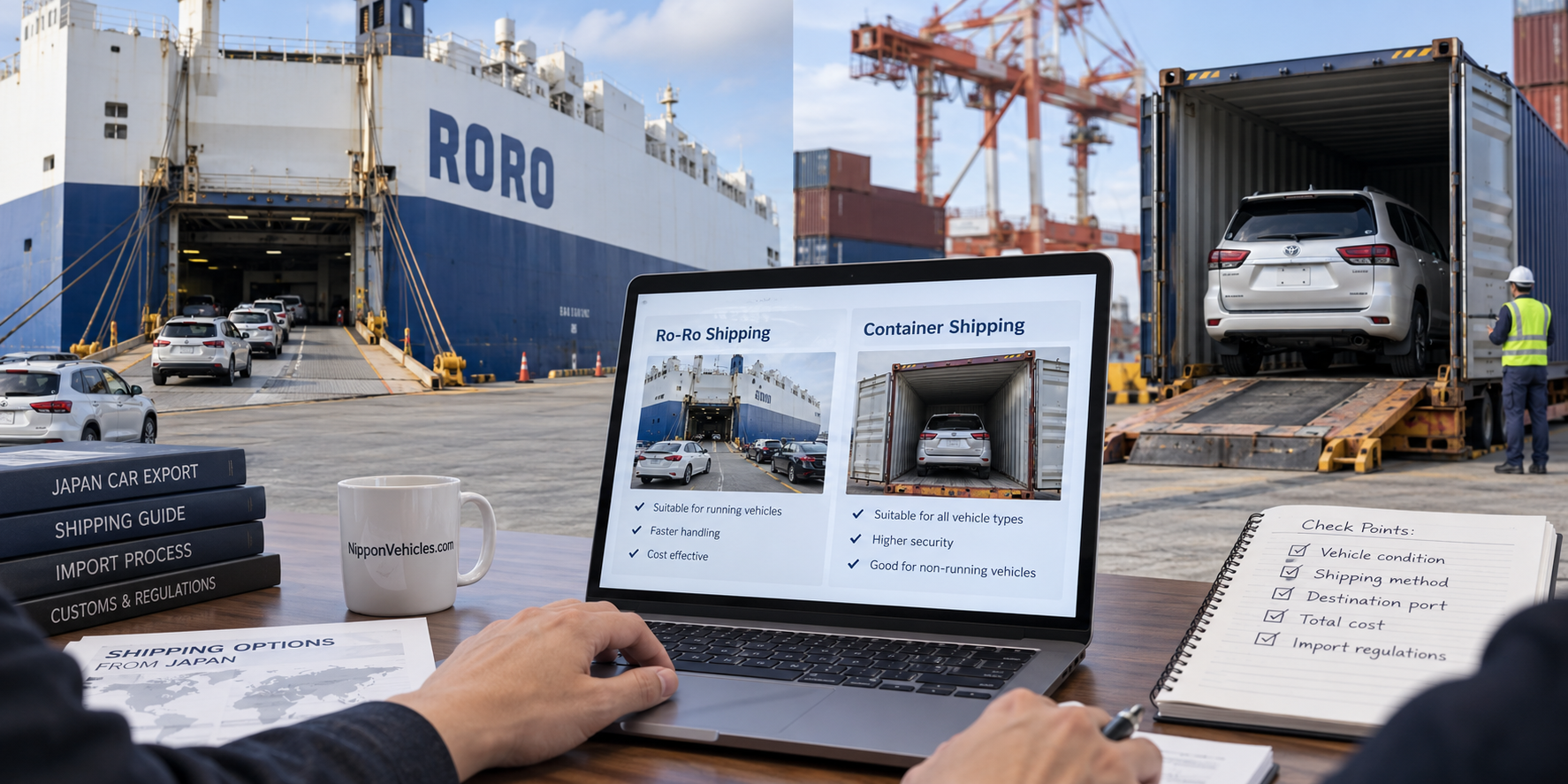
Compare Ro-Ro and container shipping before importing a used car from Japan, and understand which method is better for your vehicle, budget, destination port and buying purpose.
When importing a used car from Japan, shipping method is one of the most important decisions. Most vehicles are shipped from Japan by either Ro-Ro shipping or container shipping.
Both methods are used in Japanese car export, but they are not the same. Ro-Ro is usually simpler and more common for normal running vehicles, while container shipping may be better for high-value cars, non-running vehicles, spare parts, personal belongings or multiple units.
This guide explains Ro-Ro vs container shipping from Japan in simple words so buyers can understand the difference before asking for a FOB, C&F or CIF quotation.
Quick Answer
Best for normal running cars, SUVs, vans and trucks
Best for high-value, non-running or multiple vehicles
Ro-Ro is usually the easiest and most practical option
What Is Ro-Ro Shipping from Japan?
Ro-Ro means Roll-on/Roll-off. In this shipping method, the vehicle is driven onto a special car carrier vessel at the Japan port and driven off at the destination port.
Ro-Ro ships are designed for cars, vans, SUVs, buses, trucks and heavy vehicles. This is one of the most common shipping methods for Japanese used car export because it is simple, practical and suitable for running vehicles.
Ro-Ro shipping is commonly used for:
- Passenger cars
- Hybrid cars
- SUVs and crossovers
- Vans and minibuses
- Pickup trucks
- Commercial trucks
- Buses and machinery, depending on vessel acceptance
For a normal used car that starts, moves and can be driven safely, Ro-Ro is usually the first shipping option to check.
What Is Container Shipping from Japan?
Container shipping means the vehicle is loaded inside a shipping container. The container is then sealed and transported by container vessel to the destination port.
Container shipping is often used when buyers need extra protection, want to ship non-running vehicles, want to load spare parts together, or want to ship multiple cars in one container where possible.
Container shipping can be useful for:
- Classic cars
- Luxury or high-value vehicles
- Non-running vehicles
- Accident or project vehicles
- Vehicles with spare parts
- Multiple vehicles shipped together
- Ports where Ro-Ro service is limited
Container shipping can offer more flexibility, but it may also involve extra loading, securing, container handling and destination-side unloading costs.
Ro-Ro vs Container Shipping Comparison
The best way to understand the difference is to compare both shipping methods side by side.
| Point | Ro-Ro Shipping | Container Shipping |
|---|---|---|
| Loading method | Vehicle is driven onto vessel | Vehicle is loaded inside container |
| Best for | Normal running vehicles | High-value, non-running or multiple vehicles |
| Cost | Often more practical for one running car | Can be higher due to loading and handling |
| Protection | Vehicle is inside vessel but not in private container | Vehicle is inside sealed container |
| Personal items/spare parts | Usually restricted or not allowed | May be possible depending on rules and documentation |
| Non-running vehicle | May not be accepted | Often more suitable with special loading |
| Destination availability | Depends on Ro-Ro vessel route | Depends on container route and port handling |
For many Japanese used car buyers, Ro-Ro shipping is the easiest option. But for special vehicles, container shipping may be the better choice.
Pros and Cons of Ro-Ro Shipping
Advantages of Ro-Ro Shipping
- Common method for Japanese used car export
- Simple loading and unloading process
- Practical for cars, SUVs, vans and trucks
- Often suitable for single vehicle shipments
- No container loading arrangement needed
- Good option when the vehicle is running normally
Disadvantages of Ro-Ro Shipping
- Vehicle usually must be running and movable
- Personal belongings or spare parts are usually restricted
- Not always available for every destination port
- Shipping schedule depends on Ro-Ro vessel routes
- Some damaged vehicles may be rejected by shipping line
Ro-Ro is usually recommended when the car is in running condition and the destination port has a suitable Ro-Ro service.
Pros and Cons of Container Shipping
Advantages of Container Shipping
- Vehicle is loaded inside a sealed container
- Can be useful for high-value or classic vehicles
- May allow spare parts depending on rules
- Can be suitable for non-running vehicles
- Possible to ship multiple vehicles in one container in some cases
- Useful when Ro-Ro service is not available to a port
Disadvantages of Container Shipping
- Loading and unloading can cost more
- Requires proper securing inside container
- Destination handling may be more complicated
- Not always cheaper for one normal running vehicle
- Container availability and port congestion can affect timing
Container shipping is a strong option for special cases, but buyers should confirm loading, unloading, insurance and destination charges before choosing it.
Which Shipping Method Is Better?
The better shipping method depends on your vehicle, budget and destination port. There is no single answer for every buyer.
| Buying Situation | Recommended Method | Reason |
|---|---|---|
| Normal running car | Ro-Ro | Simple and practical |
| SUV or van | Ro-Ro | Common for export vehicles |
| Classic or collector car | Container | Extra protection may be preferred |
| Non-running vehicle | Container | Special loading may be required |
| Multiple vehicles | Depends | Compare total freight and loading cost |
| Buyer wants spare parts loaded | Container | May allow parts with proper documentation |
For most buyers importing one normal used car from Japan, Ro-Ro shipping is usually the best starting point. For special vehicles or non-running units, container shipping should be considered.
What Affects Shipping Cost from Japan?
Shipping cost from Japan is not the same for every vehicle or country. It depends on several factors.
- Destination country and port
- Vehicle size and cubic meter measurement
- Vehicle weight and type
- Ro-Ro or container shipping method
- Shipping line and vessel route
- Port congestion and schedule availability
- Inspection or cleaning requirement before export
- Marine insurance, if included
- Exchange rate and quotation timing
Large vehicles such as vans, SUVs, buses and trucks usually cost more to ship than small cars because freight may be calculated based on vehicle size or space used on the vessel.
For an accurate quotation, buyers should provide the destination port and vehicle details before comparing FOB, C&F or CIF prices.
Ro-Ro Shipping Requirements Buyers Should Know
Before choosing Ro-Ro shipping, buyers should understand that shipping lines may have acceptance rules. These rules can differ by route, destination and vehicle condition.
Common requirements may include:
- Vehicle should start and move
- Brakes and steering should work
- No dangerous fuel or fluid leaks
- Vehicle should be safe for loading staff
- Personal belongings are usually not allowed
- Documents must be prepared correctly before shipment
If the vehicle has accident damage, missing parts, mechanical problems or cannot move, confirm shipping acceptance before purchase.
Container Shipping: 20ft vs 40ft
Container shipping usually uses 20ft or 40ft containers. The best option depends on vehicle size, number of vehicles and destination handling.
| Container Type | Common Use | Buyer Note |
|---|---|---|
| 20ft container | One vehicle or smaller shipment | Useful for special or high-value single vehicle |
| 40ft container | Multiple vehicles or larger shipment | May reduce per-vehicle cost if loaded efficiently |
Container loading must be done carefully. Vehicles should be properly secured to reduce movement during ocean transport.
Common Mistakes Buyers Make
Many shipping problems happen because buyers choose a method without confirming details first. Avoid these common mistakes:
- Thinking Ro-Ro is available to every port
- Buying a non-running car before confirming shipping method
- Thinking C&F includes destination customs duty and taxes
- Comparing Ro-Ro quote with container quote without checking included charges
- Ignoring destination port handling and clearance fees
- Assuming personal items can be loaded inside a Ro-Ro vehicle
- Not checking import rules before shipment
- Not confirming inspection or cleaning requirements
Before payment, confirm the vehicle condition, destination port, shipping method, quotation term and included services.
Get the Right Shipping Advice
Nippon Vehicles can help you compare Ro-Ro and container shipping options from Japan based on your vehicle, port and buying purpose.
How Nippon Vehicles Can Help
Nippon Vehicles is a Japan-based used car exporter helping overseas buyers purchase and ship Japanese used cars from Japan. We support buyers with vehicle sourcing, auction checking, export documents and shipping guidance.
We can help you with:
- Japanese used car sourcing
- Auction vehicle search
- Vehicle condition checking
- Chassis number and auction history support
- FOB and C&F quotations
- Ro-Ro shipping guidance
- Container shipping guidance when suitable
- Export document support
Send us your destination country, port and vehicle requirement. We will guide you clearly before purchase and shipment.
Frequently Asked Questions
What is Ro-Ro shipping from Japan?
Ro-Ro shipping means Roll-on/Roll-off. The vehicle is driven onto a special car carrier vessel in Japan and driven off at the destination port.
What is container shipping from Japan?
Container shipping means the vehicle is loaded inside a shipping container, secured, sealed and shipped by container vessel to the destination port.
Is Ro-Ro cheaper than container shipping?
Ro-Ro is often more practical for one normal running vehicle, but the final cost depends on destination port, vehicle size, route, freight rate and handling charges.
Can non-running cars be shipped by Ro-Ro?
Non-running cars may not be accepted for Ro-Ro shipping. Container shipping or special handling may be required depending on the vehicle condition and shipping line rules.
Which is safer: Ro-Ro or container shipping?
Container shipping offers a sealed container environment, which may be preferred for classic or high-value vehicles. Ro-Ro is still widely used for normal export vehicles.
Can I load spare parts inside a Ro-Ro vehicle?
Personal items and spare parts are usually restricted in Ro-Ro shipping. Container shipping may be more suitable when parts need to be shipped with the vehicle.
Can Nippon Vehicles arrange shipping from Japan?
Nippon Vehicles can guide buyers with FOB and C&F quotations, export documents and shipping options from Japan based on vehicle type and destination port.
Final Advice
For most buyers importing one normal running used car from Japan, Ro-Ro shipping is usually the easiest and most practical option. It is widely used for Japanese used car export and works well for cars, SUVs, vans and trucks that can be driven safely.
Container shipping is better when the vehicle is high-value, classic, non-running, damaged, or when the buyer wants to ship spare parts or multiple vehicles together. Before choosing, always confirm the destination port, vehicle condition, shipping availability and total quotation details.
Related Guides
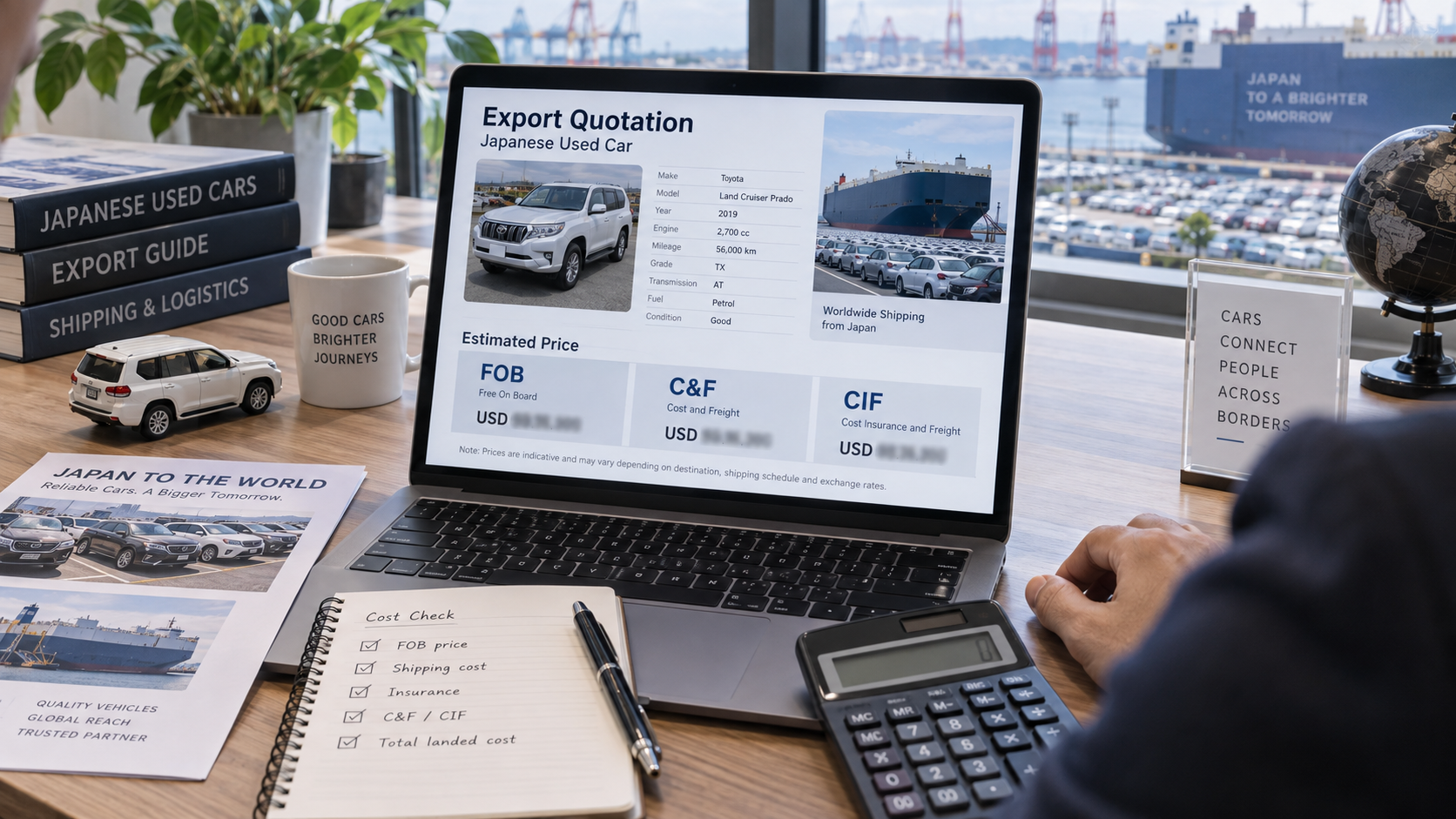
What Is FOB, C&F and CIF Price in Japanese Car Export?
Japanese Car Export Price Guide What Is FOB, C&F and CIF Price in Japanese Car Export? Understand what is included in FOB, C&F and CIF prices…
Read guide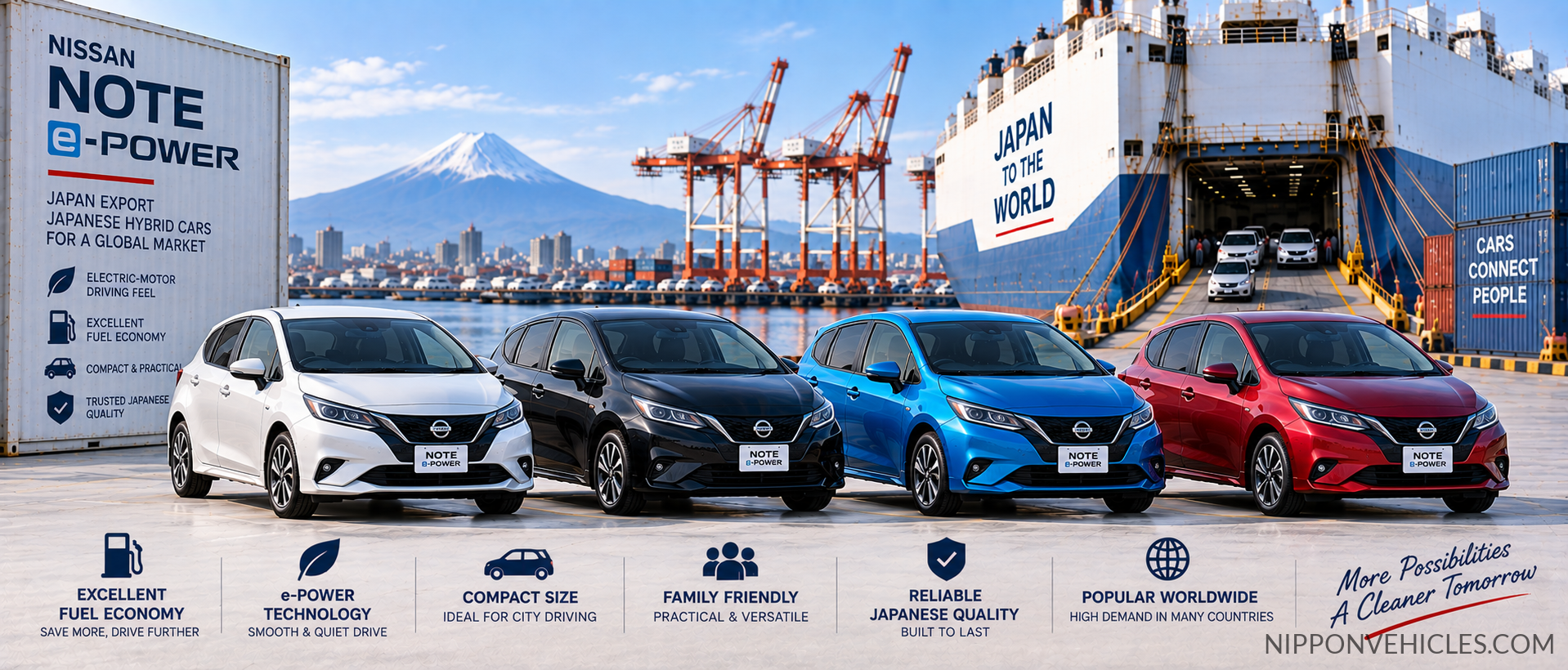
Nissan Note e-POWER from Japan Buying Guide
Quick Answer: Should You Import a Nissan Note e-POWER from Japan? Best for: Compact hybrid use, city driving, fuel economy and resale Main checks: e-POWER system,…
Read guide
Toyota Corolla Hybrid from Japan Buying Guide
Quick Answer: Should You Import a Toyota Corolla Hybrid from Japan? Best for: Fuel economy, comfort, resale and daily driving Main checks: Hybrid battery, auction sheet,…
Read guideReady to find your next vehicle from Japan?
Browse current stock and Japan auctions, or ask our export team for a C&F quotation to your destination port.